
by Joseph Stoutzenberger
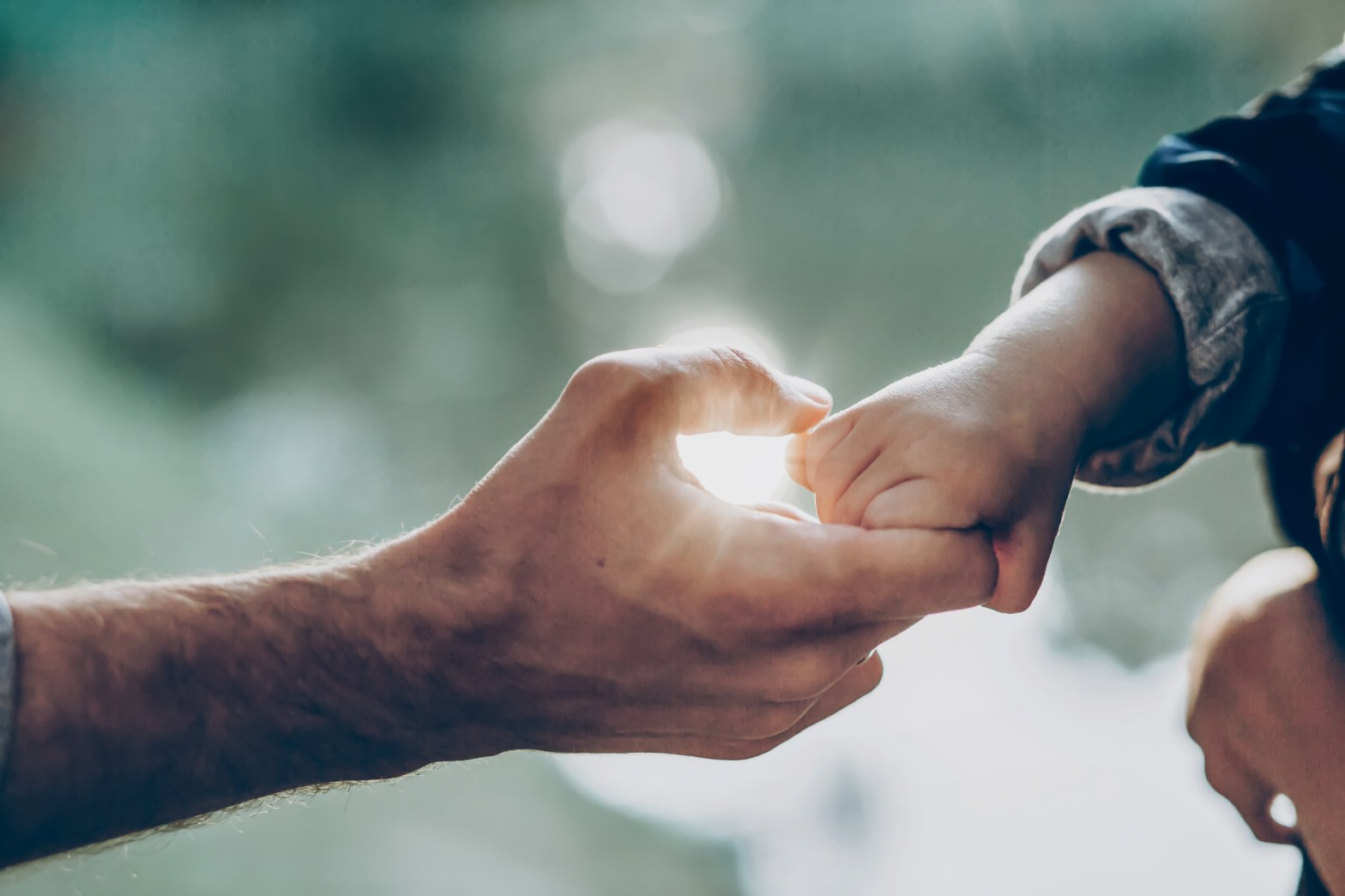
My son and his wife moved to Sarajevo last year, taking my now eighteen-month-old grandson with them. Recently, when my image shows up on their phone, and his mom asks Aidan, “Who is that?” he says, “Grandpa.” I told my son that it felt great that Aidan recognized his grandpa, even if in an image on the phone. Tim said, “Don’t get too excited. He calls any old man ‘grandpa.’”
At first, I laughed at myself for thinking Aidan knew me after not seeing me for months at that early age. Then, thinking about it more, I thought it was wonderful that Aidan thought of all older men as grandpa. Every older woman is a grandma, and aunts and uncles, cousins, sisters, and brothers surround him.
Tim took his wife to the US embassy where she worked and wanted to go in with her but had Aidan with them. The old Bosnian guard at the gate said, “Leave him with me while you go in. I’ll take care of him.” Tim sent me a brief video of the guard bouncing a ball and playing with Aidan.

Isn’t this the world we want for ourselves and our children? We are family, and we need to take care of one another. A moment takes place at every Catholic Mass that breaks the formal solemnity of the ritual. The celebrant turns to the congregation and says, “Let us offer one another a sign of peace.” All of a sudden, that person in front of us is not just an isolated individual separate from us but is someone who wishes us peace, as we wish them peace as well. In some more progressive settings, people actually move out of their pew and wander around, offering peace to as many people as they can reach. The symbolism is clear: We are family.

Now, of course, the challenge for us is to figure out how to live together as a family. I know that in Turkish culture, it is customary for all adults to contribute to the raising of children. There was something of that spirit at work in American society in some places not too long ago as well. When neighborhoods worked well, adults on the block got to know the children and would be attentive that they were staying out of harm’s way. Trick or treating on Halloween still has a spirit of neighborliness. Little ones dressed as princesses or superheroes show up at neighbors’ doorsteps and accept candy from people they ordinarily never speak to. However, the trend for decades now has been what a sociologist of American culture calls “the pursuit of loneliness.” The wealthier you became, the more you set up barriers between yourself and others.
Hopefully, religions play an important role in making the human family a reality. A recently widowed woman began a program at her parish called “the merry widows,” through which she engaged all the widows of her parish to support one another and women newly widowed. It represents just one way that a church gathering can create a supportive, family-like atmosphere. That handshake and greeting of peace at Mass is a reminder that taking care of one another needs to spill over in specific ways locally and globally. The welfare of the family demands it.
 Joseph Stoutzenberger
One thought on “Aidan’s Grandpas”