

by Joseph Stoutzenberger
Some years ago, I attended a lecture by the then Cardinal-Archbishop of Philadelphia. The focus of his talk was Catholic social teaching, but he delivered it just a few days after the scathing report on child sexual abuse by Philadelphia priests became public. When it was time for questions, the first woman to speak approached the microphone nervously. Almost in tears, she told the cardinal that she works with young people in her parish and that they are very confused, upset, and disheartened about the reports of abuse. Wouldn’t he please come and speak with them and reassure them that he understands why they are disturbed and that the church is doing all that it can to prevent this from ever happening again. The cardinal’s response was exasperatingly brief and dismissive: I have a very busy schedule and couldn’t possibly fit in a visit to your parish in the near future.
I wanted to whisper in the cardinal’s ear. Let her know that you feel her pain. Let her know how distraught you are about what the recent report revealed. Let her know that you realize how disturbing it must be for young people and that you pray for them every day. The woman didn’t want to hear about the cardinal’s busy schedule. She wanted compassion and comfort. She wanted to know that the cardinal cared. How wonderful it would have been if he had stepped down from his podium and went to her and gave her a hug. Might he even have cried with her, letting her know that he was with her and her young Catholics who couldn’t possibly connect the love of God with what was written about in the local papers?
I suppose it is unrealistic to think that every man ordained a priest or bishop would be capable of pastoral sensitivity, despite their being called “pastors.” Some are better at administration and serve best in offices apart from contact with regular people. In recent times the church has seen a pope who is more of a scholar and a professor—Pope Benedict XVI, followed by a pope who is more of a pastor—Pope Francis. Even before he was elected pope, Benedict oversaw a Vatican commission that declared that a homosexual orientation is inherently disordered and objectively wrong. I recall thinking at the time that his words would increase the number of Catholic young people who would commit suicide. Already young people who discovered that they were gay were killing themselves in greater numbers than the average. While he distinguished, in true professorial fashion, between persons themselves and their orientation, clearly, young people could not help but think that they themselves were disordered and sinful simply because of their sexual orientation. His language also very likely spurred on homophobic acts of violence, already an epidemic around the world.
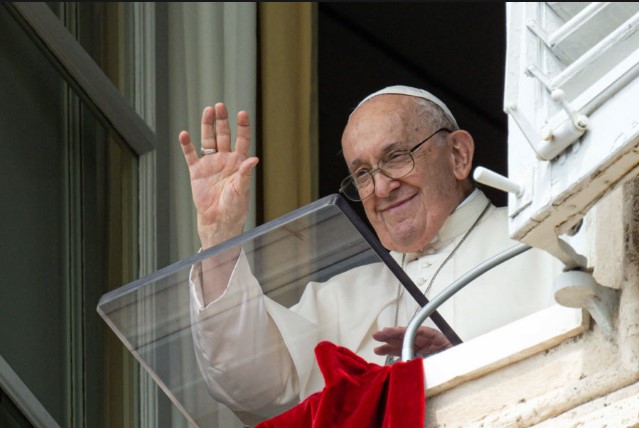
Copyright: VATICAN MEDIA Divisione Foto
That message is starkly different from what Pope Francis said to young people gathered on August 3, 2023, for World Youth Day. He told the crowd that in the church, there is room for everyone. He even had them repeat the word: “Todos!” “Todos!” “Todos!” He said that “each person encounters God by their own way.” When Pope Francis made those remarks, he was not sitting in his study pouring over law books. He was looking out over the sea of young faces, each one of which he saw as beautiful. He wanted them to know that. As a pastor, he is able to read people as well as books. He wanted these young people to know that God looks upon them lovingly, regardless of what labels would be put on them.
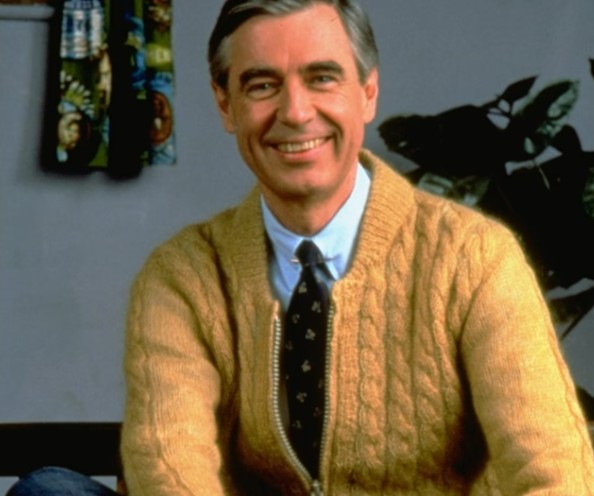
Fred Rogers, aka Mister Rogers, was a Presbyterian minister who had a popular television show until his death in 2003. He exuded pastoral sensitivity. At the end of each show, as he left the set, he said to his young viewers: “You always make each day a special day. You know how? By just your being you. There’s only one person in the whole world who’s like you, and that’s you. And people can like you just exactly the way you are.” Perhaps Jesus had the same message when he said, “In my father’s house, there are many mansions.”
I doubt that Jesus had in mind a sprawling suburban development where every house looks the same. I’m guessing that he had in mind homes that have been lived in, filled with sorrow and laughter, where people of different shapes and sizes, ages and orientations, encounter God in their own unique way and share their gifts to make a rainbow of God’s all-embracing love.
 Joseph Stoutzenberger