

by Joseph Stoutzenberger
First, a disclaimer. I have not seen the “Barbie” movie. I have been struck by reading that the movie’s creator was influenced by her Catholic high school experience for this film and an earlier one. Every upbringing makes an impact that carries over into adult life, but my antennae are attuned to reading about how Catholicism has made a difference in people’s lives. I read that while preparing to make “A Star Is Born,” Bradley Cooper and Lady Gaga discovered that they shared a Catholic background in common. Some years ago, I read that three poets, one American, one Irish, and one Polish, met at a poetry convention. They agreed that their experience as altar boys influenced their poetic perceptions.
Apparently, one of the themes in the “Barbie” movie centers around Barbie leaving her world devoid of change, feelings, decay, and a true connection with others and entering into the “real world,” where those are the order of the day. That theme mirrors what Catholic theology refers to as Original Sin, when Adam and Eve are banished from a world devoid of pain and suffering and enter into the world we live in. Barbie chooses that world instead of the pain-free, plastic world she inhabited as the sexless, always smiling doll.
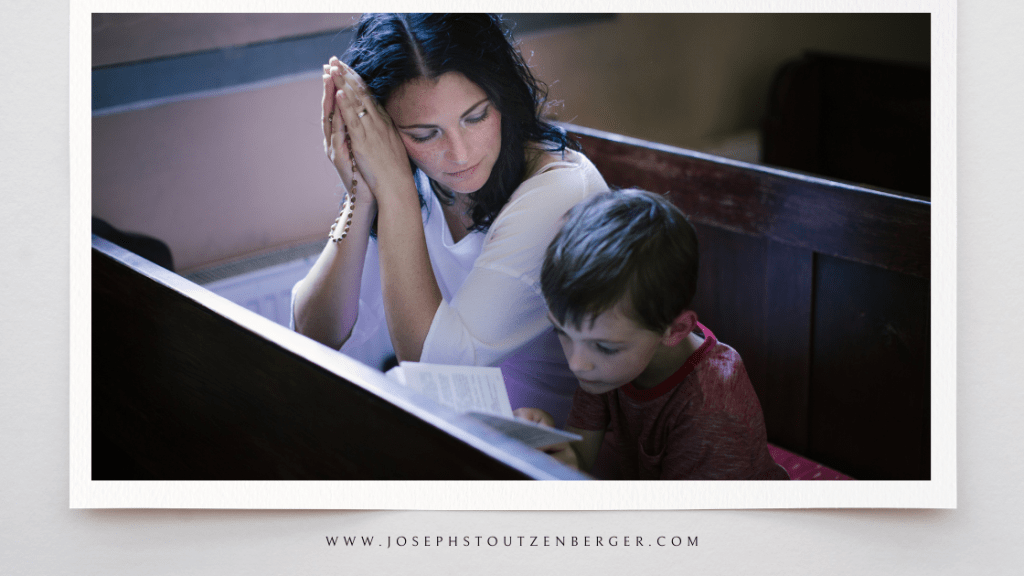
My question is, what is there about the Catholic experience that makes a difference in people’s lives? What other images and stories do people like Greta Gerwig, co-author and director of “Barbie,” internalize and draw on for creative expression? I’m guessing that it is less a matter of believing certain dogmas, and correct teaching, and more about absorbing an overall worldview into one’s life and perception. Catholics set aside time to pray, to remember that there is someone greater and a bigger picture than the one we see if we don’t pray. Lent means giving up some pleasures to be reminded that everything is a gift from God and reenacting the jarring Stations of the Cross on Lenten Fridays. Christmas means more than gifts and holiday cheer. It is a time to celebrate the wonder of a newborn child who is the savior of the world, God present in swaddling
clothes. A church gives off an aura of sacred mystery with an altar, a tabernacle, statues, candles that give light against the darkness, and furnishings unlike any found in other buildings. Stories from the bible and the lives of the saints contain messages that shape a myth to ponder and find meaning in. Little David defeats mighty Goliath. Jesus’s mother is the epitome of motherhood and a reminder that God cares for the lowly. Franz Jagerstatter is one of many Catholic saints who stood up to Nazism and paid the price for it. A series of sacraments serve as stepping stones along the way in a Catholic’s journey into adulthood, into community, and into a commitment to making the world a better place. The Eucharist is an opportunity to join others in worship, and
the pope represents the connection that Catholics have with fellow believers around the world.
If, as the saying goes, life is a mystery to be lived, not a problem to be solved, then Catholicism offers a sense of that mystery, which is hopeful, supportive, affirming, and inclusive. Every once in a while, a Catholic comes along who nudges the rest of us to see things differently and get involved where needs exist that might be overlooked. Dorothy Day made care for people who are homeless an integral part of American Catholicism. She and others also stood up to militarism and reminded Catholics that Jesus was the Prince of Peace who expects us to be advocates of peace today. Typically, Catholics find fresh ideas not as something new but as something already embedded in Catholicism that needs to be tapped into now. Gerwig’s take on Barbie is new and refreshing but is as old as the Adam and Eve story itself.
 Joseph Stoutzenberger