
by Joseph Stoutzenberger
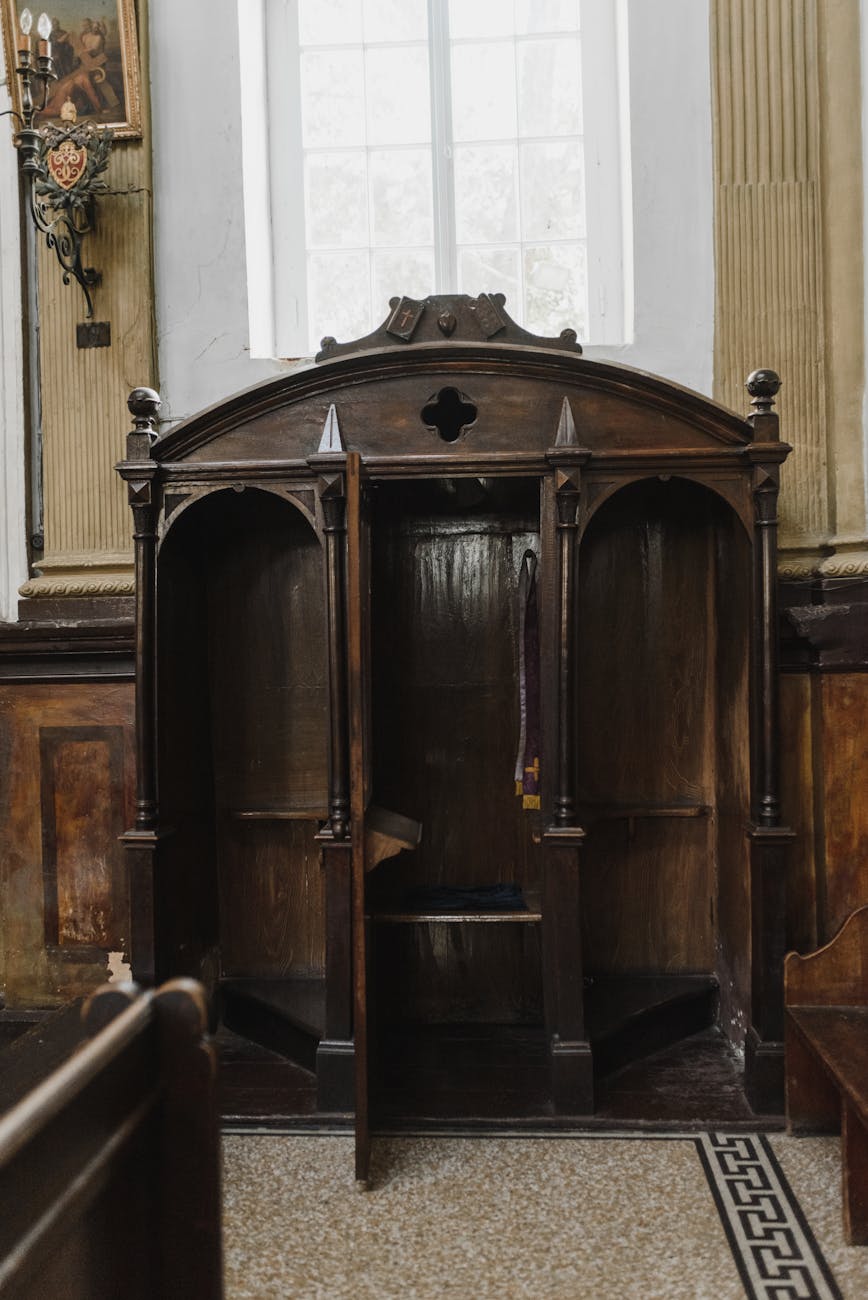
Every Monday at noon, the Basilica Shrine of Our Lady of the Miraculous Medal in the Germantown section of Philadelphia holds a novena service followed by Mass. A few hundred people, sometimes as many as a thousand, come to the service to seek the intercession of Mary for some concern they have. (A novena is nine successive days of prayer offered for a particular intention.) Some of their petitions are read aloud before the novena begins: a mother worries about her son’s drug use, a man has lost his job, a woman has a friend recently diagnosed with ovarian cancer. The church has an air of solemnity not found at most weekly parish Masses. Before and during the service, on the side of the church people line up to go to confession in an old-fashioned confessional. What draws people to this sacrament? What grace do they feel they are receiving through this ritual of asking God for forgiveness, confessing their sins, hearing a priest assure them that their sins are forgiven, and being directed to say a few prayers as their penance?
First, some facts and background. A Pew study in 2015 found that only 2% of Catholics go to confession at least once a month. 43% go once a year. No doubt that number has gone down since then. Prior to Vatican Council II, a priest’s Saturdays were as busy as his Sundays. He typically heard Saturday confessions from 2:00 to 4:00 and 7:00 to 9:00. The Council called for a review of all seven sacraments in order to make revisions based on two criteria: What was the original intent of the sacrament? How can it be updated to meet the needs of people today? The last sacrament to undergo changes was the Sacrament of Penance—confession.
The name of the sacrament was changed from Penance to Reconciliation. That name change indicates a major change in emphasis—from confession and penance to reconciliation. “Confession” sounds like what a wrongdoer admits to doing before a judge. “Penance” sounds like the punishment handed down by the judge. “Reconciliation” sounds like mending a fractured relationship, re-joining a community from which someone feels alienated. Do any of those terms describe what I imagine people were seeking by going to confession at the Shrine? My guess is that they were seeking consolation. They felt burdened and wanted to be unburdened by confessing their sins or whatever else was troubling them to a priest and hearing from him that God forgives them and loves them. They needed consoling and comfort, and they felt that ultimately only God could provide it.
It’s one thing to read in the gospels that Jesus said that forgiveness is to be given “seventy times seven times” and that he constantly told people, “Be not afraid. Go in peace. Your sins are forgiven.” It’s one thing to hear about the love of God preached from the pulpit at Mass. It’s another thing altogether to hear words of blessing for oneself directly and personally from a priest-confessor, at that moment a representative of Christ himself.
A few Catholics still go to the Sacrament of Reconciliation with the old notion that they fear God will punish them if they do not tell all their sins to a priest. Some go to confession out of a sense of scrupulosity, feeling guilt-ridden over even the smallest transgression, repeating the same sins over and over again. (I like Caryl Houselander’s advice to a young man who scrupulously went to confession every week. She told him: Stop going to confession; just leave the state of your soul in God’s hands.) My guess is that a great many Catholics want something simpler and less God-fearing from an experience of confession. They want to feel connected to God, a loving God, a God who cares for them personally. They believe that baring their soul before God in this humble act of asking for forgiveness is healing. They want to feel the embrace of God. Going to confession for them offers not just reconciliation but refreshment, rejuvenation, and consolation. It’s an opportunity to renew a pact with God: You care for me; I will try my best to be a caring person. Assure me that you love me; I will leave this sacrament trying to love myself and others as you do. I want my life to be better, but I need your help. Carry me, Lord, when burdens overwhelm me. When it works its magic, reconciliation is consolation for troubled souls.
 Joseph Stoutzenberger