
by Joseph Stoutzenberger
Looking back, I’d say I was a pious child. I was steeped in Catholic lore and took it seriously. The visual imagery of the Stations of the Cross moved me—such suffering by mother and grown son. I took Francis as my confirmation name, and it meant something to me. I had in mind Francis of Assisi, who as a young man gave up youthful revelry, embraced poverty, and found joy in it. For a number of years, every night I prayed what I understood to be the Prayer of St. Francis: “Make me an instrument of your peace.” I also prayed nightly the novena to St. Jude, patron of impossible cases. (I will leave unsaid what the “impossible case” was that I prayed for.) I developed a dangerous habit of briefly closing my eyes and saying a little prayer when I felt anxious—not a good habit when playing first base. When a classmate’s shoe came off during recess next to the church and went flying through a stained-glass window, only shattering the saint’s head, I felt it must have meant something on a deeper, spiritual level.
Perhaps this was typical of Catholic children as well as adults of the time, the 1950s. Perhaps it remains typical of children from all backgrounds who seem to be more at home in a world of enchantment. Perhaps for me it was actually more superstition than religion or authentic spirituality; after all, I also avoided stepping on cracks in the sidewalk for fear it would bring on bad luck. Perhaps the Catholic traditionalists who lament the changes in Catholicism after Vatican Council II have a point. The sense of mystery associated with Latin Mass, nuns in habits, and priests wearing cassocks and birettas (a clerical hat) as they patrolled church grounds has given way to a secularist mindset devoid of any sense of the holy. It’s fair to say that the Catholicism of my youth is not the Catholicism of today. I speak only for myself, but I seem to be not alone among Catholics and former Catholics in my age group. I grew out of the mindset of childlike piety and devotion, the way Jackie Paper stopped playing with Puff the Magic Dragon. After all, as the song says, dragons live forever, but not so little boys.
In a recent book on Catholicism, I wrote about prayer and devotions. I must admit that I felt like an outsider writing on the topic. It’s hard for me not to equate popular devotions with my childhood, not my adult self. I know that many Catholics still possess a sense of devotion and prayer; being attentive to the holy has not been erased by the forces of secularism. My wife has that gift. When she hears that someone we know is experiencing some difficulty, she says, “Let’s pray over it.” She might simply go to the basement and pray a rosary or look for a Mass to attend at a nearby church. She also finds solace in more contemporary expressions of prayer; she brings her sense of connection to the holy to whatever spiritual practices she engages in.
I don’t have that ease with devotional practices that help me actually experience the presence of God. I try to say a prayer when I hear about a friend in distress, but my mind soon jumps to questioning: “What exactly am I doing? Is this prayer?” Nothing quite brings me to what I felt as a child; perhaps that is asking too much and wouldn’t be a good thing anyway. What is an adult way to pray for us who don’t feel an uncomplicated, easy way to do so? At least to some extent, prayer implies letting go, getting out of our head, and setting aside our usual way of thinking. “Let go, let God” makes sense to me as an attitude of prayer, at least theoretically. Modern adulthood seems resistant to it. Catholics I know who have an authentic prayer life sense God’s presence in their lives and find that prayer helps them experience that presence all the more, especially in time of need.
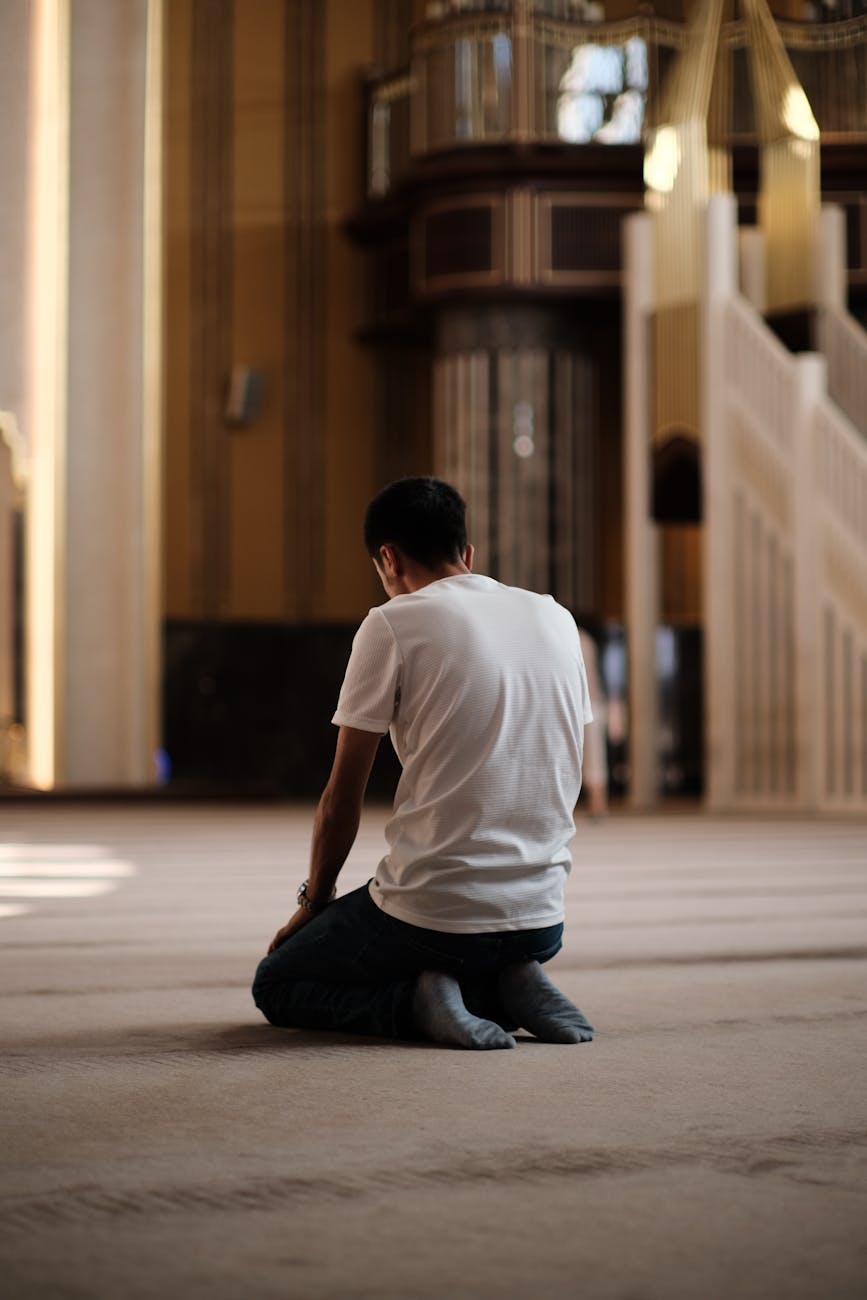
If prayer means a reverential attitude, then I do seek to cultivate prayer. I appreciate that certain places and practices help. The Fairmount section of Philadelphia is home to a convent of cloistered nuns, Sisters Servants of the Holy Spirit (affectionately known as the “pink sisters” because of the color of their habit). Their chapel is always open, and there is always at least one nun kneeling or sitting before the Blessed Sacrament. When I am near there, I like to stop in and just be in that presence. It exudes an aura of the holy with its silence and lack of busyness. It feels like a place where no words need to be said. After spending even a few moments there, everything feels different. Thank God and the good sisters for maintaining this space that does evoke prayerful reverence; no need to say anything or do anything, just be present. I know people who claim not to be religious who feel the same way while at the beach or on a wooded trail. Catholicism would be the richer if it celebrated that prayer can happen anywhere with the right attitude, and I sense that people who are “not religious” would benefit by connecting their experiences of deepened awareness to a religion such as Catholicism. What are they getting in touch with if not a divine presence?
My son recently sent me a brief video of his son who is on the CYO basketball team at his parish. Thomas is not a starter on the team, but during the prayer before the game he stood with hands folded and head bowed, looking very intense and pious. My son’s caption to me read, “Not the best basketball player, but a very good prayer.” At 6’6” I was never a bench warmer on the teams I played on, but I was thrilled to see my grandson succeeding at something more important. Hopefully during that fleeting moment of prayer, he senses that he, his teammates, and his family live in the embrace of a loving God who watches over them. I pray that this sense of reverence and awareness of the holy in our midst stays with him, even as he grows and sets aside the magic dragons of his youth.
 Joseph Stoutzenberger