

by Joseph Stoutzenberger
When we heard that our daughter-in-law, living three hundred miles away in Syracuse, was to undergo a medical procedure the next morning, my wife suggested we go to seven AM Mass to be in solidarity with them. I was struck by how the Mass actually spoke to the connectedness we were seeking. The opening prayer reminded us that in the liturgy we represented the church which exists throughout the world. We twenty people, eighteen women, were stepping out of the dailyness of our lives and entering into sacred mystery that transcends our apparent separateness. The gospel reading was about why Jesus taught in parables. His message required looking below the surface to a deeper reality, and his parables intended to jolt people to see that deeper reality. What is that reality? That we are one in Christ and not as separate as we appear to be.
A Catholic image for the unity my wife and I wanted to experience with our distant family in a time of trouble is “the mystical body of Christ.” In 1943, Pope Pius XII wrote an encyclical on the concept. He wrote that Christ took on flesh so that we might become partakers in divinity. The mystical body refers to the divine, ineffable bond that we all share in Christ. There is much to unpack in this concept. The term “ineffable” reminds us that our words and our thought categories are too small, too limited, to explain our oneness. “Mystical” can be misunderstood to mean “spiritual” as opposed to “physical.” The connection we share with those distant from us is not just spiritual. The air molecules we breathe in Philadelphia enter the atmosphere and mix with the air hovering above Syracuse. Wild fires in western Canada affect air quality thousands of miles away. The soil under our feet doesn’t recognize state borders. The material that makes up our bodies returns to the earth and is replaced with other matter. A continuous exchange of shared matter is happening within and among people all the time. We are likely being kept alive by the same particles that sustained Jesus and all the saints. The spiritual/material Catholic concept “mystical body” is acknowledged in the Eucharist. The sliver of bread people receive in communion is matter and spirit. It defies the two dimensional thinking our minds slip into when we don’t pause to ponder the mystery that the sacred time and sacred space of the Mass invites us to enter into. Our link to past, present, and future is physical as well as spiritual. That mystery is ineffable and mystical but worthy of contemplation.
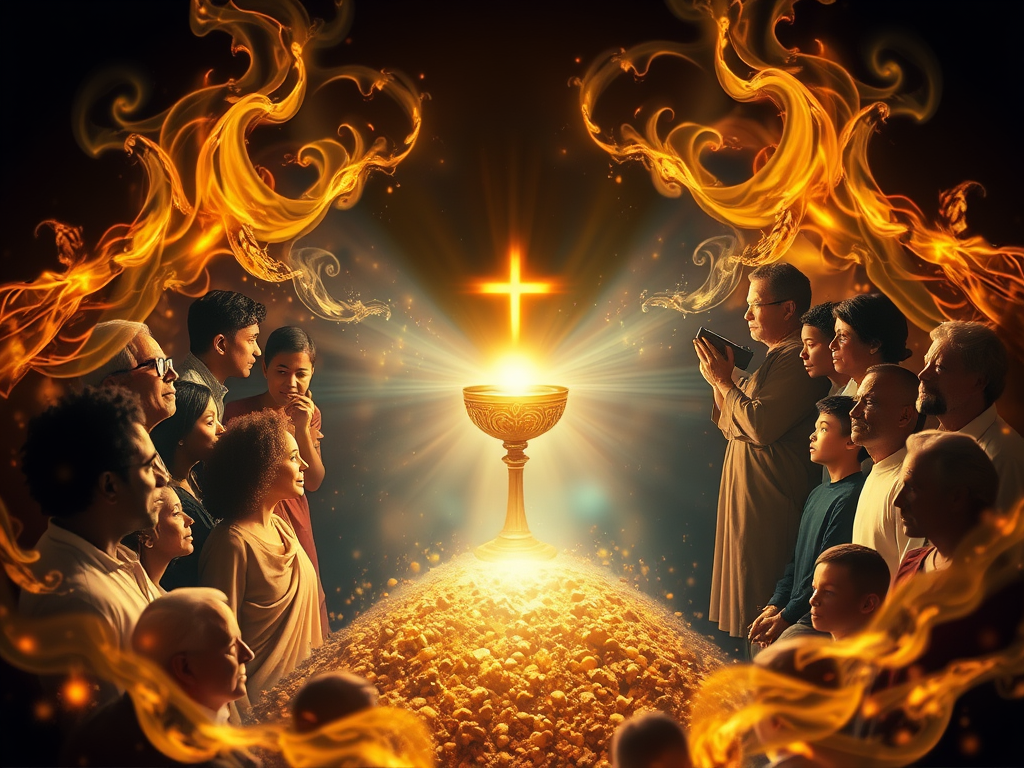
Pope Francis was fond of reminding us to “reject ideology.” Perhaps he meant that we can over-think things. The reality of the mystical body of Christ is not an idea, an ideology. It is an experience such as Jesus invited his friends to partake in when he shared with them bread, “his body,” and wine, “his blood,” the last time he was with them before he died. Thankfully, the bond with all creation expressed in the mystical body of Christ reminds us that we partake in his divinity even to this day. The pausing to pray and participate in the simple ritual of the liturgy provides Catholics a venue to experience that connection with family in their time of need, the blessing of the mystical body.
In 1943, Pope Pius equated the mystical body of Christ with the church. His description of the church as mystical body is a precursor to the more expansive, inclusivist understanding of church presented in the Vatican Council II documents twenty years later. He stated that “the Church, the Bride of Christ, is one; and yet so vast is the love of the divine Spouse that it embraces in His Bride the whole human race without exception.” That is, we live and move and have our being within a boundless divine embrace. By going to Mass that morning, we were seeking to tap into the interconnectedness that is the mystical body. Surely Christ’s mystical body transcends a mere three hundred miles of separation.
 Joseph Stoutzenberger