

by Joseph Stoutzenberger
I recently attended a gathering of Jews, Christians, and Muslims discussing the state of interreligious relations today. The Jewish speaker mentioned that Jews question whether or not it was a good thing that Christianity came into existence two thousand years ago. I had never thought to ask that question before. Jews can claim Jesus as one of their own. Certainly, neither he nor his earliest followers ever thought of themselves as anything other than Jewish, and other Jews accepted them as part of their community. A decade or so after Jesus, more and more non-Jews were drawn to his message. St. Paul, the most prolific preacher of the Jesus movement at the time, faced this dilemma head on and recommended that people drawn to Jesus not from a Jewish background did not have to convert to Judaism to be accepted into table fellowship with those from a Jewish background. That led to a hybrid entity, in time called Christianity, built upon but separate from Judaism. Perhaps the Jewish speaker at the conference was asking us to consider whether or not this emergence of Christianity separate from Judaism has been good news for Jews throughout history.
I realized that Christians can ask the same question of Islam. Would the world have been better off without the birth of that religion in Christian-dominated western Asia and northern Africa? At the time in that area, Christians were battling one other, sometimes even literally killing one other over differences of belief. Muhammad had no intention of starting a new religion. He saw himself as directly in line with prophets who came before him, from Abraham to Jesus. Fairly quickly, his message of law-regulated justice and peace resonated with more and more people who desired the heated disagreements among them to settle down. Alas, Islam did become a separate entity, just as Christianity had before it. History attests to the tensions and at times open warfare among some Jews, Christians, and Muslims. What about today?
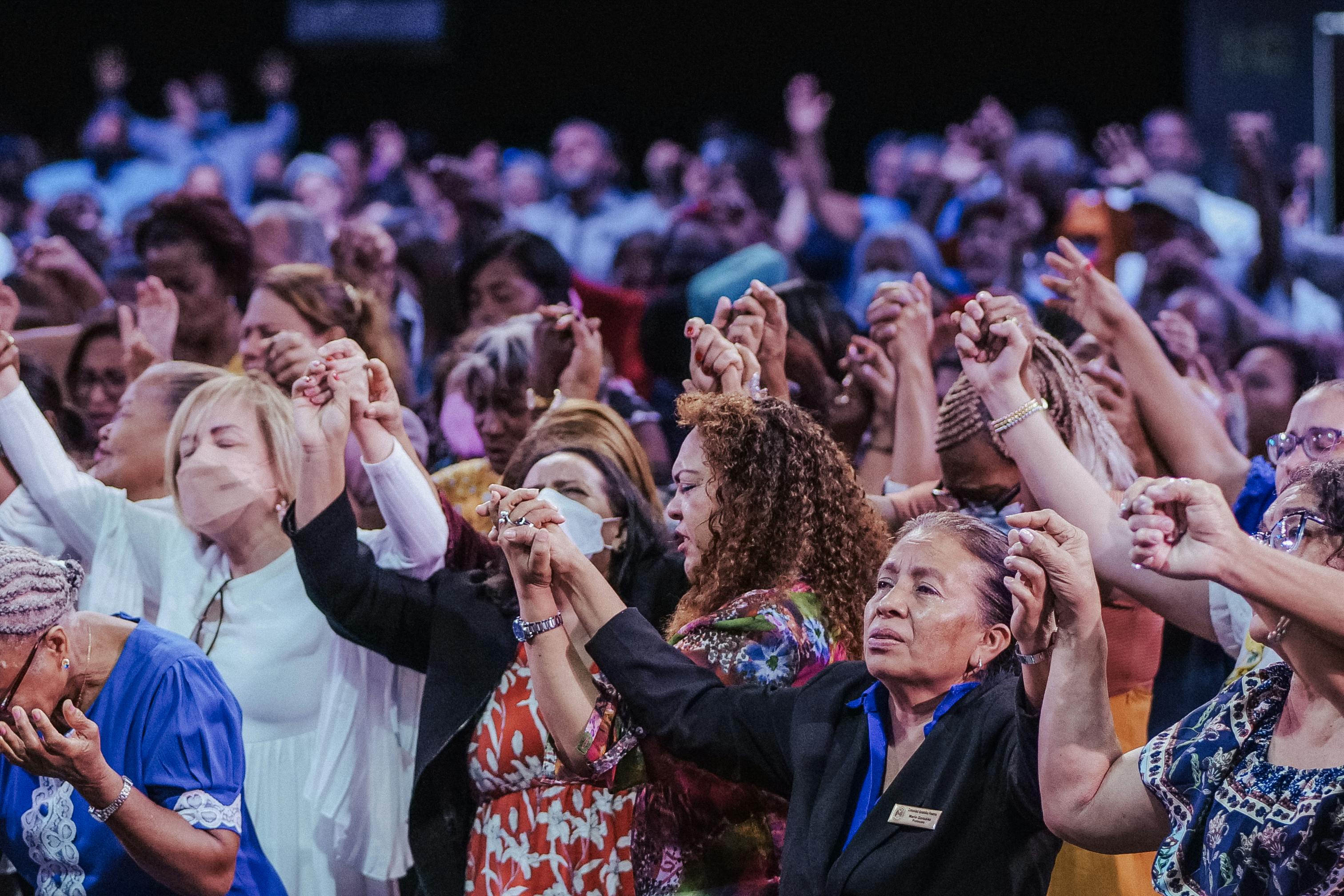
In America today, there are voices calling for the United States to be a Christian nation. Specifically, they propose that it was founded as a nation based on what are believed to be the values and ideals that emerged out of the Protestant movement in sixteenth-century western Europe. In this worldview, the diversity we find in our communities endangers those values. Another perspective is that America has always been a “nation of immigrants,” enriched by the contributions of people from many different backgrounds. The ideals enshrined in our founding documents and symbolized by the Statue of Liberty are actually a seedbed for welcoming differences and mutually enriching exchanges among people. “Liberty and justice for all” means freedom to be who you are if it contributes to the common good. The American melting pot is more a stew made up of different ingredients than a bowl of indistinguishable mush.
Allow me to mention how I have lately been enjoying one manifestation of the contributions of the variety of people recently come to our country. Within just a couple miles of my house in Erdenheim, I now have a delightful mix of restaurants to choose from. At the end of my street is a traditional American diner, which gets crowded at breakfast time. I also have six Mexican restaurants almost within walking distance. A Peruvian woman has opened a take-out, catering business that now employs four young women from the neighborhood to work the counter. I presume the owner is a legal resident of the country, but what a loss it would be if she were whisked away by ICE agents. Neighbors would miss her delicious food offerings, four women would be without work, and local farmers would go in search of other places to sell their produce. I am also grateful for the Thais, two Indian, three Chinese, one dim sum Japanese, and two Persian restaurants not far from my house. Add two Italian restaurants, a Jewish deli, and a Korean bubble tea shop that are also nearby.
I mention these restaurants as a representation of the contributions to the common good, and my enjoyment, brought about by recent immigrants. The burger and fries eating places of the 1950s gave way to pizza joints a decade later. Now young people know and enjoy Mexican foods, hummus and veggies, and even Chinese dumplings. Is it too far a stretch to say that such variety also represents the value of an exchange of multiple perspectives on more profound matters? America is enriched when different people bring to the table distinctive foods as well as different thought-provoking points of view. It’s a learning experience and an exercise in peace building when Jews, Christians, and Muslims talk openly together, and I’m developing a taste even for that spicy Indian food.
 Joseph Stoutzenberger