

By Joseph Stoutzenberger, December 24th, 2023.
A Christmas Eve morning news program ended with a panel discussing “the true meaning of Christmas.” At the heart of the discussion was, of course, “Keep Christ in Christmas.” One commentator railed against the materialism underlying all the shopping and gift-giving. Another suggested that doing random acts of kindness would be a way to demonstrate the spirit of Christmas. A third pointed out that after Jesus was born, the family returned to Nazareth and lived a normal, everyday life among family and fellow townspeople. These sentiments are worthy and hard to disagree with. To critique them is like critiquing Mother Teresa. It’s mind-boggling that we even need to admonish people to be kind and neighborly to one another, and for many years now, the materialism associated with Christmas has been addressed in churches and even in popular holiday movies. Even the word “normal” is poignant today. So many of us long for what we perceive as living a normal life while the scourge of COVID-19 rages on and political turmoil makes for an unsettling atmosphere in the country. However, as much as these messages are needed, they can be as nourishing as white bread. Do these messages truly reflect the Christmas spirit?
When thinking about Christmas gift-giving, a story from my own life comes to mind. In my teen years, I worked in a steel plant that made pipe fixtures. Conditions were oppressive. Dust filled the air; the noise level was deafening. The temperature near the cupolas spewing out molten steel was beyond tropical. The half-hour lunch break began precisely on time, and when it was over everyone needed to be on the assembly line ready to work. After every eight-hour shift, fifty men at a time crowded into open showers to wash off the dirt and grime. It was a great impetus for me to go to college. The top workers were the molders who shaped the casts for the pipe fixtures as a conveyor belt carried them past the men who poured the red-hot steel into them. Weekly pay was determined by production levels. The more pipes made, the greater the pay for everybody. Fewer pipes meant smaller paychecks. Invariably, output increased in late fall and early winter. I asked a more experienced co-worker why the molders were pushing themselves so much harder at this time of year. He told me that the men wanted larger paychecks so that they could afford to buy Christmas presents for their families.
Were these men succumbing to the allure of “materialism”? I understood what they were doing as an act of love. They lived paycheck to paycheck. If their children were to find presents under the tree, then they would have to work harder. They were already endangering their lives by working in such inhumane conditions. (My time there was cut short when I developed bronchitis from breathing in the sooty air.) The molders picked up the pace so that a little more money would be available for their children. For many poor families, Christmas is the only time they can scrape together enough money to buy gifts. A bike or a new sweater may not explicitly relate to the birth of Jesus but looked at in proper light, it is not foreign to the “keep Christ in Christmas” message. After all, Jesus himself received presents on Christmas!
Moving Beyond Individual Acts of Kindness
When it comes to acts of kindness, the airways are filled with inspiring stories of people helping others in need leading up to Christmas. Plenty of opportunities present themselves to us for donating food, blankets, and toys. It’s hard to argue that Jesus would not advocate acts of giving as a way to celebrate his birth. However, there is a dimension to his message that can be overlooked in emphasizing acts of kindness by individuals or organizations. Isn’t it true that, before John Lewis, Jesus called upon his followers to “make good trouble”? Maybe Joseph led a life of working hard, being kind, being generous when he could, keeping out of trouble, and not upsetting anyone. However, that’s not the life Jesus chose to live. At some point, he decided that he could no longer continue working as a carpenter and keeping his mouth shut. He began preaching a message that drew many people to him, but that also got him in trouble with some very powerful people. His family wanted him to return to his life of making a meager living and not challenging the structures of his society. Jesus didn’t back down. He continued to make good trouble, even though he had to know that it would lead to his arrest and probable death.
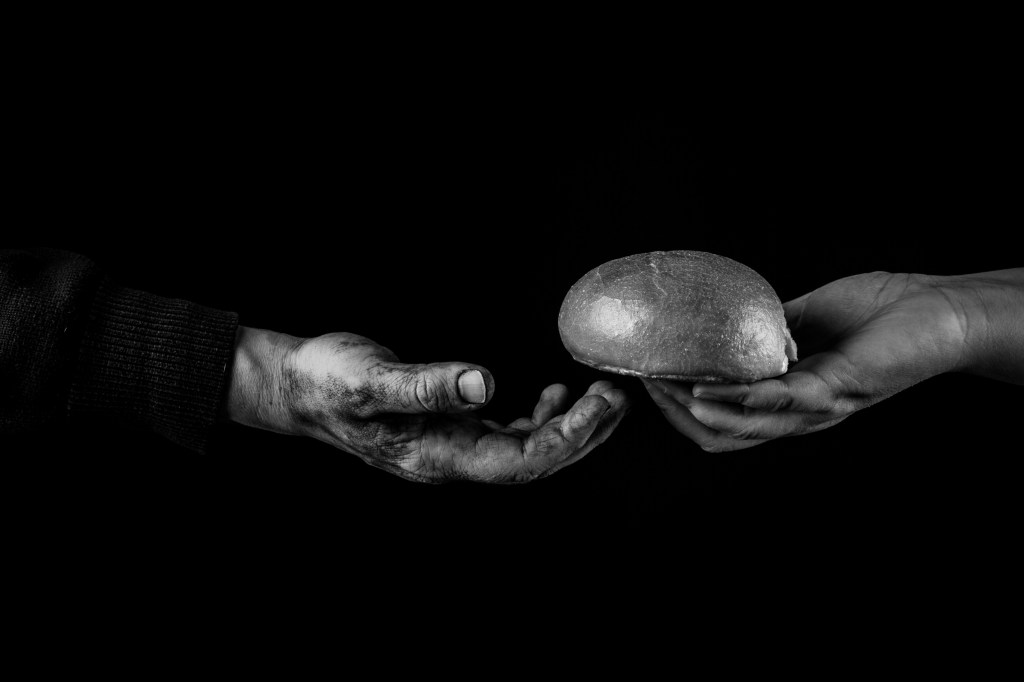
The Christmas story, rightly understood, is as challenging as it is comforting. Jesus is born away from home without proper shelter to warm and protect him. Isn’t there a message in that scene beyond serving up food at a homeless shelter on Christmas day? It seems to imply that we should advocate for policies that treat foreigners humanely and help people get off living on the streets. Shepherds are an important fixture in any manger scene or grade school Christmas pageant. Shepherds were definitely not the “haves” of ancient Israeli society. They were people whom members of proper society went to great pains to avoid. We may nod to the importance of farmworkers and factory workers, but making sure that workers on the lower end of the wage scale are guaranteed a living wage calls for political involvement. In some localities, advocating for a decent minimum wage can get a politician voted out of office by the very people who celebrate the birth of the poor one whose message first came to people subsisting on the lowest rung of the socio-economic spectrum. It’s easy to overlook the political implications of another essential element of the Christmas story. Jesus is kept alive by the warm breath of the animals in the stable. How are other creatures doing in our anthropocentric world? What changes are called for to protect members of other species along with the elements of the environment that sustain life? The Christmas stories in the gospels, rightly understood, both comfort and confront us.
Sorting through the Clutter
Undoubtedly, the ambiance surrounding Christmas has become as superficial as the dreams of the sleeping couple in “The Night Before Christmas.” As far back as 1949, E. B. White wrote elegantly about the dangers of creeping materialism associated with Christmas: “To perceive Christmas through its wrappings becomes more difficult with every year.” He reminded his readers that it is more and more of a challenge “to hear the incredibly distant sound of Christmas in these times, through the material woods that surround it.” And he was writing before “elf on the shelf” and the endless lineup of syrupy Christmas movies on the Hallmark Channel. However, gift-giving can reflect the spirit of Christmas. Pope Francis, for one, reminds us to be cautious about the trap of materialism; but that doesn’t mean that material things are bad in themselves. Parents face a persistent challenge to help their children keep possessions in proper perspective and to appreciate the simple message of Christmas.
Catholic “Both-And” Mentality Applied to Christmas
Not all elements of popular culture need to be jettisoned as if the choices are “either-or.” We either went to church or we went to the mall. Either we sing carols or “Frosty the Snowman.” Catholic sentiment has always leaned toward the “both-and,” although, as E. B. White pointed out, it is increasingly difficult to sort through the clutter. Most Christian families approach the holidays seeking to maintain a balance—presents under the tree along with a manger scene prominently displayed. It’s a challenge to be vigilant in determining what popular add-ons to Christmas are a blessing or at least a pleasant divergence. Surely the “Peanuts” Christmas special and Dickens’s Christmas Carol deserve to be placed in the “blessing” category, but many other films fall into the “pleasantly divergent” category at best. Plenty of family traditions reflect the spirit of Christmas, often simply because they are family traditions—baking cookies to share with friends and neighbors or watching together a favorite Christmas movie.

Holding onto the Message of Christmas
Like so many good stories, the Christmas story is simple but profound, presenting a straightforward message with endless implications. The love of God that we long for in dark times takes flesh in the fragile, poor, needy baby of Bethlehem. We fall on our knees at the very thought of it. In response, we make the message real and tangible however we can. Years ago, St. Pope John XXIII said: “We are one great human family, proven each year by how we feel at Christmas.” Some expressions of popular culture exploit the season in ways that are detrimental to fostering an awareness of God’s love for the one great human family, but others are sincere attempts to bring the message to life. Heartwarming stories of kindness given and received do reflect the Christmas message. There are people who need immediate help, and supporting organizations that provide help for those in need bring out the meaning of the Christ child who was a gift to all the world. Building on that message to address discrepancies in power, privilege, and participation also lies at the heart of the true meaning of Christmas. Perhaps making the leap to that realization is even more challenging than sorting through the candy-coated enticements of pervasive materialism.














 Joseph Stoutzenberger