
By Joseph Stoutzenberger
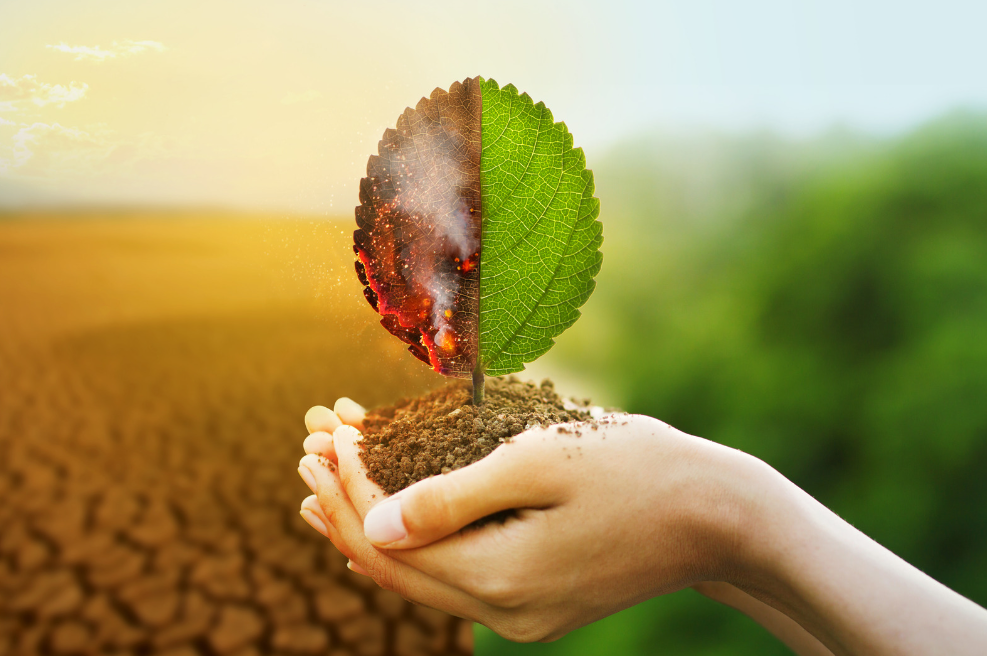
Some friends and I were talking about the crises we are facing today. Someone said, “Every generation has its crises to deal with.” I thought about that. As horrible as they were, no one thought that World Wars I and II would bring about the end of life on earth. Earlier pandemics were devastating, but they didn’t signal the end of all human life. During the Cold War between the US and the Soviet Union, especially in the 1950s and 1960s, people lived with the specter of nuclear catastrophe ending human life. There were even novels written, and movies made about what that would be like. At the risk of sounding dreary, the environmental crisis we face today seems different. I am writing this in what scientists tell us is the earth’s hottest month in history, July 2023. In some places, touching the ground can result in severe burns. For a stretch where I lived, going outside for a period of time was like smoking seven packs of cigarettes a day. Oceans are becoming so hot that important aquatic species are dying off. Bees necessary for pollination are becoming more and more scarce, choking to death on pesticides. Droughts and severe storms are making some places almost uninhabitable. Some farmers in Kansas this year have given up on their crops and are plowing them under due to the extreme heat and lack of rainfall. That can’t be good for the world’s food shortage.

I look upon the smiling, trusting face of my almost-two-year-old youngest grandson and want a verdant, healthy planet he can explore and enjoy for years to come. Is there any hope that the earth will continue to be the beautiful blue marble of a planet, unique in its ecosystems and capable of sustaining life? A key to the answer to that question is the word “hope” itself. Hope is not the same as a wish. The Lord’s Prayer is filled with hope: “Thy kingdom come, on earth as it is in heaven.” All indications are that Jesus understood that line to be a call to action. The Lord’s Prayer is implicitly contrasting the way things are with the way things ought to be. It’s not passive wishful thinking but a daily reminder to commit to creating the world as God intended it to be. “I wish that the earth would stop heating up out of our control” is not hope unless it stirs one to action. “I realize that what’s happening now is hazardous, and I commit to doing something about it” is a statement of hope. Praying for God’s help and guidance does not eliminate personal responsibility. For instance, looking into whether installing solar panels on my roof would make a difference is an act of hope. Given the conditions today, advocating for a reduction in the use of fossil fuels is a statement of hope. Supporting more environmentally-friendly means of transportation is hopeful. Praying “thy kingdom come” is not a wish but a hope-filled reflection of what can be and exploring ways to make it happen.
Right from the start, Pope Francis made concern for the environment a major focus of his papacy. In his first official homily as pope, he reminded us that we are caretakers responsible for the wellbeing of the earth. Government spending, business decisions, and personal behaviors need to make environmental impact a key concern in what we do. An underlying obstacle is the attitude that we are powerless to do anything about these environmental catastrophes. That’s the opposite of a hopeful attitude. What can we do to prevent month-long heatwaves and the continuing threat of tornadoes, droughts, heat-related wildfires, and flooding? While there are no simple solutions, that doesn’t mean that there are no solutions. A change of attitude is an essential starting point: we can make a difference.
Our children will have their work cut out for them. What about us today? Can we bequeath to them a legacy of hope manifest in an array of concrete measures to confront the problems we are facing right now? Let’s hope so.
 Joseph Stoutzenberger
A beautiful, and timely article, Joe.
LikeLike