
Skip to content
Joseph Stoutzenberger

Joseph Stoutzenberger

Joseph Stoutzenberger, Ph.D., is a Professor Emeritus of Religious Studies at Holy Family University in Philadelphia.

  • Home
  • Books
  • Journal

Catholicism: Does It Liberate?

by Joseph Stoutzenberger

In the 1990s, at one of their annual meetings, the U.S. Catholic bishops lamented that the vast majority of Catholic married couples practiced artificial birth control, which was declared immoral in a 1968 papal encyclical. They concluded that the problem was that the teaching was not explained well enough in Catholic schools and parishes.

I had taught religion in a Catholic high school for eleven years and later in Catholic colleges, so I was very interested in what was happening in Catholic education. I made the topic the subject of my Ph. D. dissertation: Catholic High School Religion Textbooks: Do They Liberate? Catholic religious education is not to be indoctrination, but it is intended to bring students to an appreciation and understanding of Catholicism and its teachings. However, for the past fifty years accrediting agencies evaluate schools on how well they incorporate “critical thinking” into their curriculum. The study of Catholicism, as with other subjects, should offer students opportunities to analyze, question, and critique. Critical thinking happens in social studies classes; shouldn’t it also take place in religion courses? 

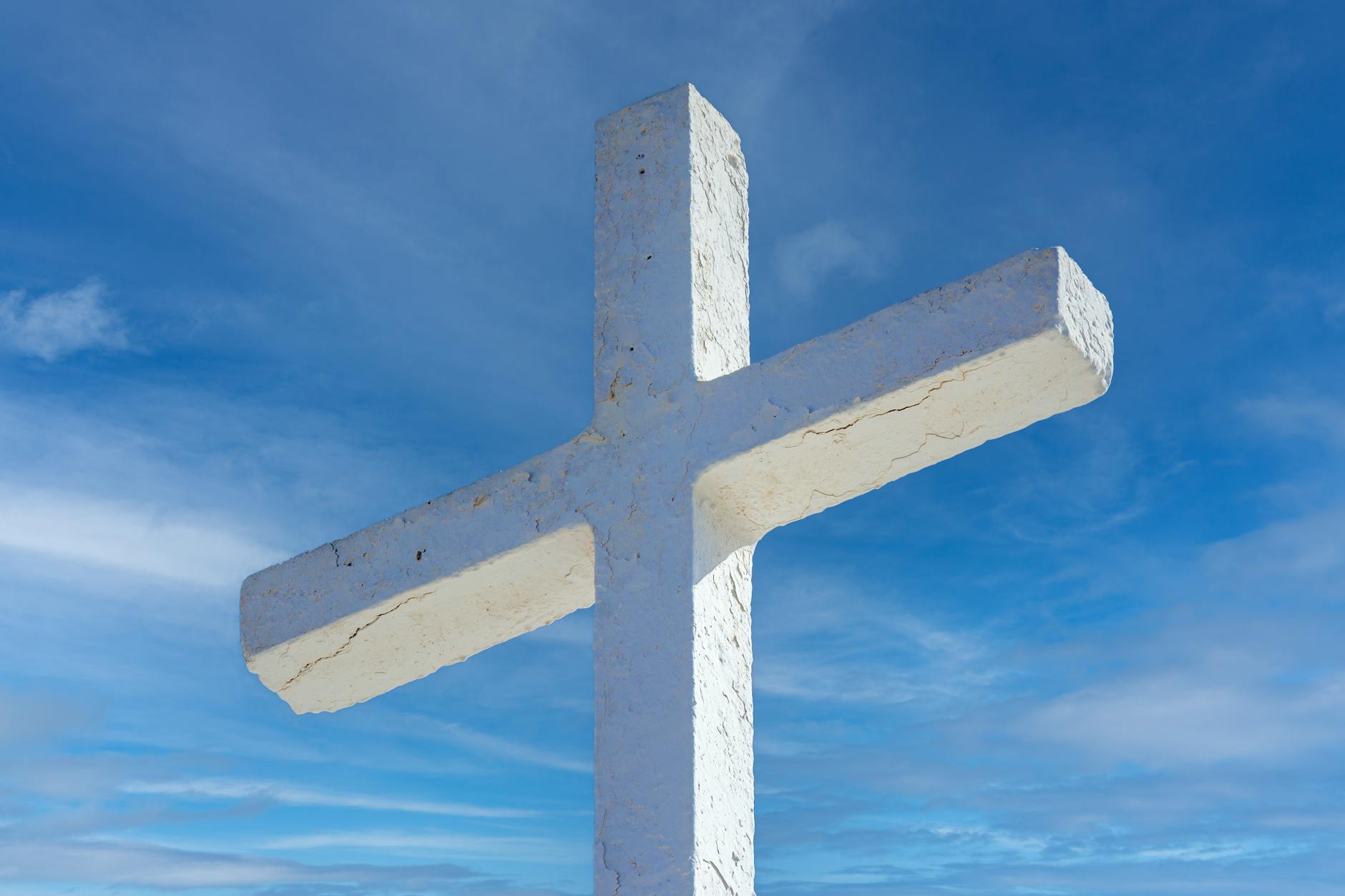
Photo by Pixabay on Pexels.com

In my dissertation research, done in the 1980s and early 90s, I came across two studies that raised questions about education as liberation. A conservative Christian school incorporated critical thinking into its study of the church it was affiliated with. The study found that, after graduating, most of the students left the church! A longitudinal study of students who graduated from a Catholic high school in New Mexico discovered a similar result. Four years after graduation, most students had rejected official Catholic teaching on a number of issues, most notably, the teaching that artificial contraception is immoral. 

Does including questioning and critical thinking in its education undermine Catholicism? Can Catholicism itself be liberatory, a place for free exchange of ideas and of questioning authority? Should it be? If Catholics are to question dominant secular norms, should they also be open to analyzing and critiquing Catholicism itself? According to the Gospel of Luke, Jesus began his own teaching career proclaiming that he came to bring liberation to captives. He meant people physically in prison, but also people imprisoned in their narrow point of view. All during his public life he constantly asked thought-provoking questions. His death on the cross was an exclamation point but also a question mark to his message. His early followers struggled to make sense of it; it went against established expectations about what the messiah would be. Jesus’s questioning of authority eventually led to a break by his followers from the dominant norms both of Jewish and Roman establishments. 

Catholicism today can play the role that Jesus did in his day. In the 1980s, the U. S. Catholic bishops issued two pastoral letters that questioned prevailing positions on two timely topics:  the economy and war and peace. Their letters met with rejection and even condemnation from some powerful voices. Individual Catholics can also find in their faith the impetus and inspiration to raise questions and put forth alternative points of view. A few years ago, I was called up for jury duty. The case was that of a young man who had killed a police officer, so the death penalty was a possibility. Potential jurors were asked if anyone was against the death penalty. I raised my hand and was brought into the judge’s chamber. I was asked upon what basis I objected. I said that as a religion teacher in a Catholic school, I knew that Catholic teaching viewed the use of capital punishment as morally wrong in today’s world. The Irish judge and the Italian lawyer, both probably Catholic themselves, didn’t know what to make of my answer; but they dismissed me from the jury pool. The Catholicism they knew was not so counter to the laws of the land as I understood it to be.

Vatican Council II offers a guideline for those who want to see education as liberation: “The human spirit must be cultivated in such a way that there results a growth in its ability to wonder, to understand, to contemplate, to make personal judgments, and to develop a religious, moral, and social sense” (“The Church in the Modern World,” #59). Wonder, think, question, make judgments, be attentive to others—hallmarks of liberatory pedagogy. Didn’t Jesus want his followers to cultivate these very qualities?

Posted byjoestoutzenbergerNovember 1, 2024October 25, 2024Posted inCatholic, Christian Politics, Compassion, Education, Ethics, Family, Healing the Catholic Church, Interfaith CooperationTags:Catholic Questions, Compassion, Ethics, Joseph Stoutzenberger, modern catholic concerns, modern catholic social teaching commentaries and interpretations, Moral TheoryLeave a comment on Catholicism: Does It Liberate?

Roots and Wings

by Joseph Stoutzenberger

Sometime into his first year of college in the 1990s, I asked my oldest son what was the main message he had learned so far. He said he learned that half of his professors believed that “the sixties” were the greatest period in modern history with the civil rights movement, women’s liberation, gay liberation, concern for the environment, and the anti-war movement. The other half of his professors saw the sixties as the beginning of the downfall of civilization. The Catholic Church was not immune from this split. The majority of bishops at Vatican Council II, the church’s major event of the sixties, believed that humanity had moved away from a more static understanding of reality toward a more dynamic one, opening the door to wholesale changes in the church. There was a backlash against Vatican Council II, the most extreme coming from a French cardinal who broke away from the Catholic Church altogether. However, many members of the church questioned the changes begun with the Council and that continued thereafter. For them, the church was a rock, not a flowing stream that changed with the landscape.

Photo by Mark Neal on Pexels.com

In my recent book on Catholicism, I mention a concept I read about from the English Dominican Timothy Radcliffe—root shock. The term is self-explanatory. The rapid pace of change taking place in modern times has left many people feeling uprooted. It’s a shock to the psyche. So much of what was familiar has vanished. That word, “familiar,” derives from “family.” Shopping in locally-owned stores was like visiting family, now replaced by less personal shopping in big box stores, or even more impersonal on-line shopping. For Catholics, the ringing of bells at Mass is seldom heard, a practice that was intimately associated with Catholic worship not too long ago. Flicking a switch to turn on an electric votive light before a statue just doesn’t have the symbolic power of lighting a candle for someone who is sick. The aura of reverential silence in church has been replaced by attempts to get a congregation to actively participate. 

Along with all people today, Catholics are faced with how to balance holding onto one’s roots while incorporating the new. The turn toward change seems inevitable. Conservative Catholics feel that more liberal-leaning Catholics are turning the faith into a social-justice movement divorced from a sense of the sacred and the divine. Liberal Catholics are frustrated that conservative Catholics are turning a blind eye to the many ways people are hurting in our world. For them, “Let us pray for those less fortunate” is an empty diversion when getting out there and being involved in solving the world’s problems is called for.

Pope Francis has committed himself to bridging the gap between these groups, although many conservatives see him as aligned too closely with the liberal wing. His synod is an attempt to arrive at common ground, achieving a consensus that at least the great majority of Catholics would agree on. Francis speaks and writes about the need for both roots and wings, holding onto the foundations of the faith while being open to change. In his mind, the so-called social justice agenda is not giving into secular values. Rather, he sees addressing social problems as flowing from Catholicism itself. He attempts to link traditional Catholicism with social concerns. For instance, he has been talking about a re-emphasis on no meat on Fridays, standard practice for Catholics sixty years ago, and linking it to cutting back on consumption of meat in order to have a positive impact on the environment and the world’s food supply. He emphasizes the Eucharist as a place of welcome and communal sharing, which can inspire Catholics to welcome strangers such as immigrants and sharing bread with those in need. He suggested that Catholics use the tradition of “giving up” something for Lent and making it a time to commit to doing something positive for others instead.

Recognizing the need for both roots and wings is reasonable enough on Francis’s part. However, the challenges Catholics face today seem insurmountable. What gets included in the roots, and how far is it acceptable for wings to spread? Pope Francis doesn’t want to judge people committed to living out their lives as other than traditional heterosexual, male or female persons. Does that open the door to same-sex unions or even marriage and sex-change procedures? Does permitting divorced and remarried couples who have not had previous marriages annulled to receive communion undermine the sanctity of marriage as a life-long commitment? Does working alongside health care and hunger relief programs that also advocate for birth control and abortion rights water down Catholic teaching on these matters?

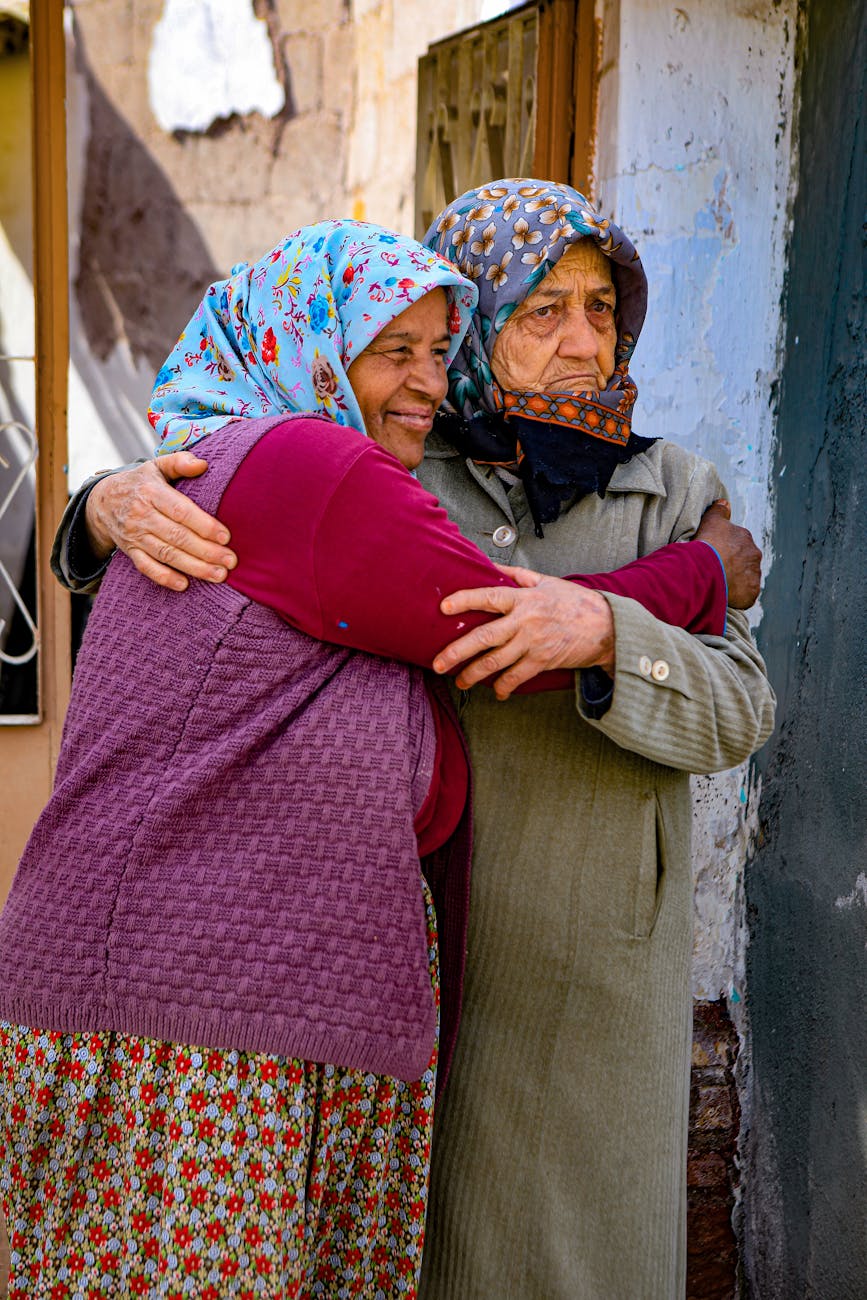
Photo by Tobias Bju00f8rkli on Pexels.com

Battle grounds are drawn and are not likely to dissolve anytime soon, synod or not. Perhaps a Gandhian approach would be helpful. Identify what everyone has in common. Build on that. Celebrate that. Keep coming back to that. Have conversations about that. Set animosity aside. As Francis reminds us, roots grow best in a garden, not a museum; and growth is always dynamic, not static.

Posted byjoestoutzenbergerOctober 30, 2024October 25, 2024Posted inAngels, Catholic, Christian Politics, Education, Ethics, Healing the Catholic Church, pope-francis, UncategorizedTags:Catholic Questions, Compassion, Joseph Stoutzenberger, modern catholic concerns, modern catholic social teaching commentaries and interpretations, pope-francisLeave a comment on Roots and Wings

When the Saints Go Marching In

by Joseph Stoutzenberger

Like so many people, I dread watching the local news. Each evening is a litany of murders interspersed with an occasional fire. I recognize that such events are newsworthy since they are such tragedies for the individuals and communities affected, but it’s deflating to say the least. I try to remind myself that murders make the news because they are the exception, not the rule. What isn’t “news” are the many acts of kindness that people do. Philadelphia and its environs are home to a convenience store called Wawa that has taken the city by storm, largely because of the touch screen ordering it pioneered. When I was still teaching, I passed four on my way to work alone. It is customary for Wawa shoppers to hold the door for other customers, especially when the other person is holding a coffee in one hand and a sandwich in the other. That doesn’t make the news. I stopped in a small Indian-food takeout in the Mt. Airy section of the city that had only two small tables for customers to sit at while waiting for their order. While I was waiting, a disheveled man walked in and asked the woman behind the counter, “Can you spare any food?” She immediately came out and ushered him to sit at a table. She brought him a platter brimming with food, got him a drink from the refrigerator, and treated him like welcome royalty. I felt privileged to witness this simple act of kindness that would never make the news. I wanted to make an appointment with my eye doctor but was told he is off for a month working with Doctors without Borders in Sierra Leone—a healer with a heart. He doesn’t do this to make a splash on the evening news.

Photo by Umut Ku00fcu00e7u00fck on Pexels.com

We are surrounded by saints. How do we recognize them even though we seldom hear about them, and how might we find ourselves in that number when they come marching in? Catholicism lists twelve fruits of the Holy Spirit, based on a passage from St. Paul’s letter to the Galatians. They are a catalogue of saintly qualities. Three of those fruits are love, kindness, and patience. When the Holy Spirit is present in our communities, these three virtues are at work. Catholicism exalts people known for kindness. Some are identified officially as saints; the vast majority are simply doing what they find is called for in their faith. I recall being invited to speak about Catholicism to a class at a state university. One question I was asked left me speechless: Why are so many Catholics involved in working in poor communities and in the world’s trouble spots? I wanted to answer: Because they’re Catholic! If Catholics are not concerned about people in need, they’re missing the entire point of the religion. Most commit to living these qualities in their family and local community, but some Catholics pursue that message so intensely that they get involved where they see the greatest need for love, kindness, and patience. That’s why in Philly, for instance, there are homeless shelters, soup kitchens, meal delivery programs for shut-ins, convalescent homes, schools in poor neighborhoods, and hospitals run by Catholics.

When I switch from local news to national cable news casts, I must admit that there is much mean-spiritedness in our public discourse these days; some of which is voiced by people who identify as Catholics, and even by some people who serve in leadership positions in the church. It’s hard for me to reconcile this spirit with the Holy Spirit. Here are the twelve fruits of the Holy Spirit as listed in the Catechism of the Catholic Church: “charity, joy, peace, patience, kindness, goodness, generosity, gentleness, faithfulness, modesty, self-control, chastity’” (#1832). Would that all people would ponder these twelve before speaking about other people, especially Catholics who claim these gifts as an important part of their tradition. 

The Hindu woman at her takeout restaurant exhibited kindness and generosity. Holding a door for another customer is an act of patience and simple goodness. Hateful speech is not the language of peace that St. Paul and Catholic tradition calls for. I can think of many members of the communion of saints known for gentleness and charity. I can’t think of any who were demeaning of others. In 2000, to mark the beginning of a new millennium, Pope John Paul II apologized profusely for any hurtful or harmful behavior on the part of Catholics toward certain groups such as indigenous people and women. He knew that such behavior was not of the Spirit. If they are inspired by the communion of saints, those who want to be counted in that number dedicate themselves to creating communities of compassion wherever they are, embodying the fruits instilled in them by the Spirit through their Catholic upbringing.

Posted byjoestoutzenbergerOctober 28, 2024March 20, 2025Posted inAngels, Beauty and Awe, Catholic, Christian Politics, Compassion, Equality, Ethics, Family, Healing the Catholic Church, Interfaith Cooperation, Life has to be LivedTags:christianity, Compassion, Ethics, god, jesus, Joseph Stoutzenberger, love, modern catholic social teaching commentaries and interpretations, Moral Theory, spirituality of the ordinaryLeave a comment on When the Saints Go Marching In

Who Wears the Pants in the Family?

by Joseph Stoutzenberger

A newly ordained priest was recently assigned as associate pastor at a neighboring parish. He regularly wears his cassock, a long black robe, during public functions and around the parish grounds. During Mass, he is the picture of hands-folded, head-bowed piety. At a parish staff meeting, he announced that women should not enter the sanctuary as lectors or eucharistic ministers if they are wearing pants. Dresses or skirts are expected. He made no mention of what men needed to wear.

I tried to understand what was behind his “no pants for women” position. It seems out of touch with today’s fashions and an affront to women. Perhaps it is actually the archdiocese’s policy that the priest is adhering to. If so, I know the regulation is not adhered to in other parishes. My concern is that it appears to be about politics and power. 

Concerning power, his pronouncement was apparently made without consultation with a parish council or staff. The church has called for parishes to install parish councils to make decisions that affect the life of the parish in conjunction with pastors. This young priest was operating out of an autocratic style that the church has been seeking to move away from. I had a friend who became the pastor of a parish in Maryland. He expected the parish to be financially solvent; but when he took over, he discovered that it had accrued an excessive amount of debt. The previous pastor was a lover of religious art and statues. He often traveled to Germany and Italy to purchase expensive statues, shipped to and paid for by the parish, without consulting with a finance committee about whether or not this was the best use of parish funds. He even had a life-size statue of the Sacred Heart of Jesus in the priests’ private quarters that no parishioners ever saw. I know of another parish, this one in the Harrisburg diocese, that had an active youth choir, complete with piano and guitars, that played at Sunday Masses. A new pastor came in and immediately disbanded the choir and hired a friend of his, an older woman, who played the organ by herself and only chose old-fashioned traditional hymns that no one sang along with.

Photo by Rene Terp on Pexels.com

Should parish decisions be in the hands of one individual, even if that individual is ordained? It smacks of the clericalism that Pope Francis speaks out against so forcefully. In 2021, speaking to a group of seminarians, he said that “clericalism is a perversion of the priesthood: it is a perversion. And rigidity is one of the manifestations.” “When I find a rigid seminarian or young priest, I say ‘something bad is happening to this one on the inside.’ Behind every rigidity, there is a serious problem, because rigidity lacks humanity.”

Catholicism is not ready for the approach used by some Protestant churches, such as Presbyterians and Methodists, who interview candidates for pastorships in their parishes. However, the church clearly has been calling for greater lay involvement and shared decision making for some time now.

Is the priest’s decision political? There’s a saying that goes back centuries about “Who wears the pants in the family?” It equates wearing pants with being in control of the family. Implied is that husbands are supposed to wear pants and be in charge of family matters, as they are supposed to do in the natural order and some would say prescribed in scripture. When women wear pants and exert authority in the family, it is a disruption of the natural order. Some conservative Christian women adhere to what they see as a biblical mandate to wear dresses and concede final authority in the family to their husbands. The young priest may not express this perspective on power overtly, but I wouldn’t be surprised if he harbors these sentiments and is acting on them covertly. He might say that he is simply concerned about proper attire in the sanctuary, but that concern represents his understanding of gender and power. Does he really believe that women wearing pants is less attractive or decorous that women in skirts? If he believes that, he needs to get out and talk to more women, especially professional women. I suspect that women in pants suits are threatening not just his sense of proper attire but of his understanding of power arrangements between the sexes. Is Sister Lillian in pants more threatening that Sister Lillian in a dress? Perhaps she is.

Posted byjoestoutzenbergerOctober 25, 2024Posted inCatholic, Christian Politics, Education, Equality, Ethics, Family, Healing the Catholic Church, Interfaith CooperationTags:Catholic Questions, christianity, Compassion, Ethics, feminism, Joseph Stoutzenberger, love, modern catholic concerns, modern catholic social teaching commentaries and interpretations, Moral TheoryLeave a comment on Who Wears the Pants in the Family?

Is Catholicism a Nature Religion?

by Joseph Stoutzenberger

By instinct, we humans are attuned to the rhythms of daylight and nighttime, work and rest, and the seasons of the year. As a teen, I worked the night shift in a steel factory, eleven at night until seven in the morning. We called it the “graveyard shift.” Some workers claimed that they didn’t mind it, but I never quite got acclimated to being awake all night and trying to sleep during the day. What was the meal to be eaten after work—breakfast or supper? How could you convince the world around you to keep quiet during the day so that you could sleep? The factory work and the graveyard shift were great incentives to go to college!

Catholicism has prayers and practices that tap into the differences in the days, weeks, and year. There are formal prayers, called the Liturgy of the Hours, aligned with seven different times during the day. You most likely would only encounter them if you spent time in a monastery or belonged to a group such as Third Order Franciscans, but there are also informal prayers for waking and bedtime and moments in between available for Catholics. Not every ancient culture had the concept of a seven-day week with one day set aside for rest; it ranks up there as one of the great gifts from God. God doesn’t need our praise and worship every sabbath; we need that day to regroup and remember our place in the universe. Our minds and bodies are transformed with each change of season. The seasons are physical, natural phenomena but have an impact on us spiritually as well. We lose touch with ourselves and that which is greater when we do not tap into the ways of nature happening all around us daily, weekly, and yearly.

Photo by Craig Adderley on Pexels.com

One of the most striking events of World War I was the “Christmas truce of 1914.” German troops were hunkered down in trenches within ear shot of the British, Scottish, and French troops in their trenches. On Christmas eve, at the risk of exposing their positions, some German soldiers lit candles on Christmas trees and began singing carols. Soon the allied troops began to join in, and then soldiers on both sides braved walking out into the “no man’s land” between them. Someone produced a soccer ball, and a game ensued. A well-known German juggler performed for the English soldiers who knew him from his performances in London. A Scottish barber gave haircuts to German soldiers who requested them. Photos and stories were exchanged between the warring parties. Afterwards, generals on both sides took pains to prevent such gestures of goodwill on Christmas for the remainder of the war.

Christmas, of course, celebrates the birth of Christ; but in the northern hemisphere it comes right in the middle of the darkest days of the year. There’s a natural longing for light to signal hope for a future thaw and increasing sunshine. With or without the stimulus of coffee, hopefully mornings are invigorating and evenings are a time to slow down. As Ecclesiastes reminds us, there is a time to plant and a time to harvest. Catholic liturgy, a word meaning “public work,” reflects the spirit of the changes we experience naturally. Of course, it also references and celebrates the great events of salvation history, especially the events in the life, death, and resurrection of Jesus. Linking those events with the rhythms of nature does not diminish them but taps into what is happening naturally in our body, psyche, and soul. To put it in theological terms, the same God born in winter and raised from the dead in spring also created night and day and the seasons of the year. 

In the not-too-distant past Catholicism feared what was called pantheism, equating the universe with God. It left Catholics dismissing the earth and our own earthiness as a distraction at best and evil at its worst. Catholics were to set their sights on heaven above, not the muddy, messy natural world. Some theologians then spoke of “panentheism,” meaning that God is an entity separate from the universe but is manifest in the processes of the material world. Others advocated “creation-centered spirituality,” celebrating the holiness of nature. Such sentiments have become such a part of the Catholic worldview today that Pope Francis made care for the environment a central theme of his papacy. The natural world, the rhythms of days and years, and the progression of time are sacramental, a way God speaks to us, not apart from the liturgical year but in tandem with it. When we disregard setting aside time for rest and fail to enter into the spirit of the seasons, we miss the way the divine is present to us. The bible itself starts out by reminding us that all that God has created is good, very good. We celebrate that goodness when we join with the rest of creation in singing the praises of the goodness of the natural flow taking place within us and around us daily and throughout the year.

Posted byParker FarrisOctober 21, 2024March 20, 2025Posted inBeauty and Awe, Catholic, Christian Politics, Compassion, Education, Environmentalism, Equality, Ethics, Family, Healing the Catholic Church, Interfaith Cooperation, Life has to be LivedTags:books, Catholic Questions, Compassion, Ethics, Joseph Stoutzenberger, modern catholic concerns, modern catholic social teaching commentaries and interpretations, Moral Theory, philosophy, poetry, politics, spirituality of the ordinary, travelLeave a comment on Is Catholicism a Nature Religion?

If God Is Love…

by Joseph Stoutzenberger

When I was a child, I loved movies. As a paperboy, if I paid my bill in full by 10:00 Saturday morning I received a pass to our local movie theater. (My small home town had only one theater.) I attended many Saturday matinees. I took it to heart when a character I liked died in a movie. When that happened, I developed a habit of running out of the theater, going to a nearby park, climbing a tree, and imagining that I had a special potion that would bring that character back to life. Something in us humans abhors suffering and death, and longs for a life that is greater than the apparent finality of death. We want our loved ones to be with us for eternity.

The Kurt Vonnegut novel Slaughterhouse-Five is worth reading if for no other reason than for one little vignette. Billy Pilgrim, the protagonist in the novel, has the ability to travel in time. One evening, he is watching a World War II movie and, since he can, decides to watch it backwards. He sees exploded bombs returning unexploded back into airplanes and shipped back to factories where mostly women workers are dismantling them and returning their ingredients to the earth from which they came. Would that our world was like that! Like myself as a child, Billy Pilgrim wants to reverse the ravages of death; and in his reveries he is able to do so. Do we have only two possible viewpoints regarding death and its aftermath—either despair or childish wishful thinking? Might there instead be grounds for hope?

What does Christianity have to say about death and the possibility of afterlife? It doesn’t provide an explanation; but it does offer some consolation by highlighting that Jesus, one of us who is also divine, endured death—not just death, but excruciating torture and the worst form of execution the Romans of his time could think of. It goes on to say that, based on the word of a number of his closest friends and followers, this human-divine Jesus was raised from the dead. For Christians, because of Jesus, people can hold onto the hope that death is not the end.

Photo by Felix Kiss on Pexels.com

Is there anything in the life and teaching of Jesus, even apart from his appearances after his death, that would support belief in the resurrection of the dead? A key message proclaimed by Jesus is that God is love. That message came through not just in his words but in his actions and life story. Ironically, Christians find the message of love expressed most definitively in Jesus’s death on the cross, as if his out-stretched arms are an embrace from a loving God.  

Some years ago, two Christian pastors wrote a book with an intriguing title: If God Is Love. That sentence can be completed in any number of ways, all of them hopeful and consoling. One way that came to me is: If God is love, then life beyond death makes perfect sense. To believe in God is to believe that God is love. That love does not cease when someone dies. Does it make any sense that God would be vengeful or even indifferent rather than loving? (“I created this mess just to see people suffer.” Or “I created this mess, but I don’t care what happens to it.”)  Theologian Leonardo Boff expresses beautifully that to believe in God is to believe that God is love: “To say ‘I believe in God’ means that there is Someone who surrounds me, embraces me everywhere, and loves me. Someone who knows me better than I do myself, deep down in my heart….Believing in God means saying: there exists an ultimate tenderness in which I can take refuge and finally have peace.”

In other words, God shares the deepest longings of the human heart. Resurrection means that the lives of loved ones who die remain part of a mosaic of incomprehensible beauty. Love would settle for nothing less. Yes, people die; but they die into the loving embrace of that Someone whose name is love.

Posted byjoestoutzenbergerOctober 18, 2024March 20, 2025Posted inAngels, Beauty and Awe, Catholic, Christian Politics, Education, Equality, Ethics, Family, Healing the Catholic Church, Life has to be LivedTags:bible, Catholic Questions, christianity, Compassion, Ethics, faith, jesus, Joseph Stoutzenberger, modern catholic concerns, modern catholic social teaching commentaries and interpretations, Moral Theory, spirituality of the ordinaryLeave a comment on If God Is Love…

Seeing the Bigger Picture

by Joseph Stoutzenberger

I attended two funerals recently. One funeral was a Mass in a large, very traditional-looking Catholic church. The person who died had recently transitioned from being a man to being a woman. Two priests, friends of the deceased, presided at the Mass; and both spoke during the service. They both referred to their friend as “she” even though they had known her as a man for many years. I was surprised that they did not refer to her sex change or said that she was a “troubled soul” in search of her true identity. Instead, they talked about how generous she always had been, how she was always there to help others, and how she had been marked as a child of God in baptism. At the luncheon after the Mass, a man said to me, “You know, the Catholic Church does not approve of transgender people.” I wanted to say but didn’t: Were you at the same liturgy I was? The woman had a funeral in a Catholic church that would have been at home in the eighteenth century. There was a Mass presided over by not one but two priests. It included traditional Catholic hymns and a blessing over the ashes with incense. Wasn’t this “the church” recognizing the deceased as a child of God, beloved of Jesus, and a member of the church by virtue of baptism?

The other funeral service I attended took place on the patio of a country club. I knew the man who had died as a generous person who was very active in many civic organizations. The service consisted of listening to a few popular songs, a poem, and reminiscences by family and friends. No mention was ever made of God or anything directly spiritual, even though the man had attended Catholic schools through college and had identified as Catholic earlier in life. This funeral was actually the second I attended in the past few years that took place at a country club. In both cases, the setting was beautiful, looking out on a golf course. Reminiscences shared about the deceased were touching. But I couldn’t help but feel that something was missing.

Every human life is part of a bigger picture. As theologian Thomas Berry said, “We can feel alienated, but we can never be alienated.” Both funerals I attended recognized the impact that the person had on the many people they had encountered throughout their lifetime. Both people had touched a multitude of others either directly or indirectly. They were part of the great drama being played out in the human story and, even more broadly, in the creation story. Christianity is not alone among religions in placing each person’s story in communion with a universal story. Christianity explicitly celebrates that physical death is not the end of a person’s story. I found that both funerals I attended actually gave recognition to that. During the Catholic funeral liturgy, the priest kept mentioning that his friend who had died had joined the communion of saints in heaven. That imagery, used frequently in Catholicism, recognizes that, even when people die, they remain part of the bigger picture that we are all part of. I sensed that the country-club funeral was also giving voice to the same message without explicitly saying so. Why else commemorate the person’s legacy at all?

Photo by Ivan Samkov on Pexels.com

I have a photograph of a friend of mine who had died some years ago on a bookshelf by my desk. Whenever I see it, I sense his presence. His laughter and his love were infectious and still are. The Christian story provides language and imagery that helps me make sense of that ongoing presence. A person’s death should be a time of prayer, not just words. (Isn’t that true for births and weddings and other milestones as well?) The Catholic liturgy is not just a remembrance of a person; it is also a giving thanks to God for all that the person has been. Eucharist means “giving thanks.” For Catholics, a eucharistic liturgy is the rightful and meaningful way to give thanks to God and the person who has gone home to God. Admittedly, I have been to Catholic funeral Masses that were less touching than services that took place apart from a religious setting. However, when done well, the hymns, the readings, the homilies, and the overall God-centered context of a Catholic funeral service helps us see the person as part of a great mosaic created over time and for all time. It is an opportunity for mourning, prayer, thanksgiving, and hope for the deceased and us all.

Posted byjoestoutzenbergerOctober 16, 2024October 11, 2024Posted inCatholic, Christian Politics, Education, Equality, Ethics, Healing the Catholic Church, Life has to be Lived, UncategorizedTags:Catholic Questions, Compassion, Joseph Stoutzenberger, modern catholic social teaching commentaries and interpretations, spirituality of the ordinary2 Comments on Seeing the Bigger Picture

Thank God for the Blessed Mother

by Joseph Stoutzenberger

The beginning of the Nicene Creed, recited by Catholics at Mass, refers to God as “the Father almighty, maker of heaven and earth.” The creed was composed by bishops called together in 325 by the non-Christian Roman emperor of the time, Constantine. He wanted Christians who were fighting among themselves to resolve their differences for the good order of the empire. It’s easy to imagine that when the bishops called God the Father almighty that they had the emperor in mind. By contrast, practically every chapter of the Islamic scripture, the Quran, is preceded by referring to God as al Rahman, al Rahim, the all-merciful, the all-compassionate. The creed does say that Jesus was born and died for us and our salvation, truly an act of compassion. However, in the context of the infighting of the time, a Father almighty might conjure up an image of the proverbial warning used by exasperated mothers to settle down her children who are fighting each other: “Wait till your father gets home!”

Thank God for the Blessed Mother. There’s no hint of judgment or wrath in her, only pure love and nurturing. She is mentioned once in the creed, as the one through whom Jesus is born; but she has played a much more prominent role in Christianity, especially in the Orthodox and Catholic traditions. Miryam, as Muslims and Jews call her, is mother of Jesus but indirectly is mother of us all. Her image is a far cry from “Father almighty.” Granted, some mothers are not motherly; they are incapable of being loving and nurturing or might even require their children to take care of them. There have been and continue to be mothers who are judgmental and even malicious toward their children. (In fairy tales, these examples of churlish mothers are typically not real mothers.)  

Real mothers, regardless of their biological relationship to children and little ones, are caring and loving, often unconditionally so. In one of the few stories about Mary in the gospels, she is attending a wedding with her son and realizes that wine is running out and the party isn’t close to being over. She exhibits compassion even in this mundane situation, saying to her son simply, “They have no wine.” In Luke’s gospel, Mary identifies herself in song as one of the lowly ones. If you feel depressed, deprived, or left out, Mary is the one to go to; she’s been there and knows what it is like. In recent centuries there have been accounts of her appearing to children or people who are downtrodden. She appeared in 1591 to an indigenous Mexican peasant named Juan Diego on a hill outside of Mexico City. He wonders who she is at first, and eventually she tells him: “Am I not here? Am I not your mother?”

My own mother was a great baker. When she baked pies, she baked enough to fill the many pans she had of assorted shapes and sizes. She had one pan that was less than four inches in diameter. When I sat at the kitchen table and watched her prepare her pies, she would whisper to me, “This one is just for you,” as she kneaded and filled the little individual-sized pan. No doubt she said the same thing to her other five children when they were with her; but it made me feel special; it made me feel her love. As was customary in those days, my mother never said “I love you” in words. She said it in pies and cakes and other expressions of love. One evening when I was grown up and had moved away from home, she called me unexpectedly and said, “I love you.” I responded, “I love you too, mom.” She said that she was watching Leo Buscaglia on PBS, and that he said if you love someone, you should tell them. Thank you, Leo Buscagila.

Photo by Paweu0142 L. on Pexels.com

 For some time now, a more loving, less distant and judgmental image of God has become dominant in Catholicism. However, Mother Mary has not gone away in the Catholic imagination.  An image of the Blessed Mother that modern Catholics are familiar with is that of the Immaculate Heart of Mary, popularized in France in the early nineteenth century. She is depicted with her heart held in front of her chest, pierced with a sword. The image exudes compassion and offers solace to those who are suffering. In 2022, Pope Francis dedicated the people of Ukraine and Russia to the care of the Immaculate Heart of Mary, praying for her intercession to bring peace to the war-torn land. Mary is a mother with a heart. Doesn’t she represent what we want to see in our God?

Posted byjoestoutzenbergerOctober 12, 2024March 20, 2025Posted inBeauty and Awe, Catholic, Compassion, Education, Ethics, Family, Life has to be LivedTags:Compassion, Ethics, faith, god, jesus, Joseph Stoutzenberger, love, modern catholic social teaching commentaries and interpretations, spirituality of the ordinaryLeave a comment on Thank God for the Blessed Mother

Is the Church Worth Saving?

by Joseph Stoutzenberger

I have many friends who grew up in religious households who no longer involve themselves in any religion. Some even say that the world would be better off without religion. I have found that former Catholics in particular are quick to point out the church’s flaws. At times I tend to agree with them. And then I think about all the good that people who were inspired by their Catholic faith have done and continue to do. Catholicism has its share of heroes.

A good example is the eighteenth-century French priest Abbe de l’Epee. He was already drawn by his faith to do charitable work in Paris when one day he came across two young girls sitting on a bench. The two sisters were gesturing to each other with animated hand movements. De l’Epee realized that the girls were deaf and communicating through their hands rather than sounds. He discovered that other deaf people in Paris were also using basic sign language, and he set out to learn from them. 

Photo by RDNE Stock project on Pexels.com

When he tried to establish a ministry to deaf people, he encountered resistance from leaders in the church. (Perhaps that’s what my disgruntled former Catholics would focus on.) There was a question at the time as to whether deaf people could be saved because scripture says that only those who “hear” the word of God can be saved. Children who were deaf were commonly denied reception of the sacraments because of this. De l’Epee brought his young deaf friends before a gathering of leaders to demonstrate how they were, in fact, speaking to and hearing from each other in the language unique to them. In 1855, he established the first free school for deaf people and devised a system of sign language. Some elements of his signing are still in use in various sign languages today. A stained-glass window depicting Abbe de l’Epee meeting the two young deaf girls sitting on a bench can be found in the chapel of the National Catholic Office for the Deaf outside of Washington, DC.

Church history is filled with heroes such as de l’Epee, who often make invaluable changes simply by going where their faith leads them. In the Middle Ages, a great change swept across Europe. A young man named Francis of Assisi, wearing rags and renouncing all possessions, visited the pope with his twelve companions. The pope, dressed in finery and living in a palace, found no grounds upon which to dismiss the sincerity of Francis and the lifestyle he was espousing. He couldn’t deny that it was gospel-based. Thousands of people across Europe adopted the way of Francis in one form or another. Part of his message is found in his song “The Canticle of the Creatures”: “Be praised, my Lord, in those who pardon out of love for you.” A dramatic decrease in conflicts happened in many places where constant warfare had been commonplace because Francis-inspired people refused to fight.

In the early nineteenth century, France was becoming more and more a secular society. Universities were hotbeds of anti-religious sentiment. One student of literature, Frederic Ozanam, who later became a professor and an expert in the writings of Dante, began a study group while in college where discussion of the ancient faith was welcome. Some of his secular friends chided him: If you think so highly of your faith, why don’t you put it into practice? Ozanam realized that they were right. He enlisted fellow Catholic students to go in pairs into the slums of Paris, delivering food and helping people in need however they could. He named his group after St. Vincent de Paul, who earlier had himself inspired many wealthy French men and women to serve those who were poor. Frederic continued his charity work even after he was married and had a daughter. Today, the St. Vincent de Paul society continues to serve the needs of poor people throughout the world. 

For a long time, and still today in some places, educating women was frowned upon if not outright forbidden. In the United States, Catholic women religious, nuns, took on the work of educating children on the margins of society. During the Civil War, Catholic nuns, such as the Daughters of Charity, served as nurses for wounded soldiers right on the battlefield. They also were tireless in helping people during the flu epidemic a century ago. Catholic sisters established 150 colleges for women in the United States at a time when women were denied access to the majority of schools of higher education. They faced many hurdles. One nun who pursued doctoral studies at the Catholic University of America had to sit in the hall by the door to hear lectures as only men were permitted in the classrooms themselves. She and other women religious gained doctorates in various fields so that they could provide quality education for women. Even though their numbers have dwindled considerably, Catholic nuns continue to play a prominent role in serving their communities.

Photo by Jade on Pexels.com

What is the common denominator motivating the heroes of Catholicism who do such great work? They would all agree that their faith spurs them on, inspires them, and guides them in what they do. Would the world really be better off without them?

Posted byjoestoutzenbergerOctober 11, 2024October 11, 2024Posted inCatholic, Education, Equality, Healing the Catholic ChurchTags:Catholic, Catholic Questions, catholic-church, Joseph Stoutzenberger, modern catholic concerns, modern catholic social teaching commentaries and interpretations, Moral Theory, news, pope-francis, religion, spirituality of the ordinaryLeave a comment on Is the Church Worth Saving?

St. Francis of Assisi and Nature

by Joseph Stoutzenberger

A few years ago, a publisher approached me about writing a book about Francis of Assisi and nature. I knew Francis is associated with love of creation and is the patron saint of the environment. His statues with birds on his shoulder and other animals at his feet in gardens everywhere attest to his popularity as the one saint most in tune with nonhuman creatures. Did he deserve this reputation, or could other saints have just as easily been chosen for this honor? I decided to look into recent Catholic teaching about nature and Francis’s contribution to it.

Before the late nineteen-sixties, Catholic leaders and theologians said little about nature as we know it. “Nature” was not the wonderful world of birds and bees, oceans and trees. Nature was an abstraction, such as “human nature” or “the natural order.” Something changed in the late sixties. A catalyst for that change was a 1966 lecture delivered by a medieval historian at an academic conference, later published in an academic journal. Lynn White decried the disregard for and exploitation of nature that he saw around him. (This was four years after Rachel Carson published her groundbreaking Silent Spring and alerted the world about the dangers of pollution and our mistreatment of nature.) White declared that the Judeo-Christian tradition was largely to blame. Its anthropocentrism, centering on humanity, provided a justification for treating the rest of nature with no regard for any impact on water, air, soil, and species teetering on the verge of extinction. He pointed out that in the bible itself God gave humanity (Adam) a mandate to “have dominion over all creatures.” Christians typically interpreted that to mean that they were separate from and above the rest of creation; they were in charge. White suggested that Francis of Assisi stood out as someone who held a different perspective on nature.

Photo by Pixabay on Pexels.com

Around this time, theologians of all traditions began to look into their teachings to see if there was anything in them that would counter the degradation of nature they were hearing about and seeing around them. Bible scholars looked at the Hebrew word used in Genesis for “dominion over.” They discovered that the same word is used in the next story told in the bible, about the two sons of Adam and Eve. Cain is jealous of his brother Abel and kills him. God seeks out Cain and asks him about the whereabouts of Abel. Cain replies, “How should I know? Am I my brother’s keeper?” The word for “keeper” here is the same as the word used for “dominion over.” Scholars realized that God was really telling Adam that he was responsible for the rest of creation; he was to be a caretaker of other creatures, just as Cain was indeed responsible for his brother’s welfare. This realization gave rise to the concept “stewardship” in Catholic teaching. Nature did not belong to human beings to do with as they wished. Instead, they were to be good stewards of what belonged to God. Care for creation was a biblical mandate.

What about Francis of Assisi? Two stories written about Francis early on paint a different picture of how he viewed the rest of nature. In one story, Francis is trying to preach to a crowd that had gathered. He can’t be heard because a flock of birds nearby is chirping away loudly. Francis says to the birds, “You have been praising God in your way. Would you be quiet for a bit so that I can also praise God in my way?” The birds become silent, and Francis sings God’s praises to the crowd just as the birds had been doing. In another story, Francis is staying at an abandoned monastery with some of his brothers. It’s time for night prayer, but Francis hears crickets outside his window. Instead of going to chapel for night prayer, he instead joins the crickets in singing the praises of God.

These two stories do not describe Francis as lording it over other creatures, not even to be a caretaker of them. Instead, he recognizes that he and they are fellow creatures under God. He and the sun, the moon, water, and fire are sisters and brothers. This democracy of nature, human and nonhuman together, is a radical vision of the relationship between humans and the rest of creation. All creation is one family. 
When Jorge Bergoglio took the name Francis as pope, it signaled that he intended to serve in the spirit of Francis of Assisi. He demonstrated concern for people who were poor and struggling, such as immigrants to Europe from Africa. He soon showed that concern for those in need extended to nonhuman creatures as well. An early encyclical of his begins with the opening line of Francis of Assisi’s Canticle of the Creatures, Laudato Si. Pope Francis alerted the people of the world that we need to recognize we share one home with the rest of nature. As brothers and sisters, we live together in harmony or perish in isolation from insensitivity, a misguided vision of invulnerability, and misuse. He found inspiration for that message in the simple life story of his namesake, Francis of Assisi.

Posted byjoestoutzenbergerOctober 9, 2024March 20, 2025Posted inBeauty and Awe, Catholic, Christian Politics, Compassion, Education, Environmentalism, Ethics, Family, Life has to be Lived, Saint Francis of AssisiTags:bible, christianity, Compassion, Ethics, god, jesus, Joseph Stoutzenberger, modern catholic social teaching commentaries and interpretations, Moral Theory, spirituality of the ordinaryLeave a comment on St. Francis of Assisi and Nature

Posts pagination

Newer posts 1 … 3 4 5 6 7 … 9 Older posts
Joseph Stoutzenberger, Create a website or blog at WordPress.com
  • Subscribe Subscribed
    • Joseph Stoutzenberger
    • Already have a WordPress.com account? Log in now.
    • Joseph Stoutzenberger
    • Subscribe Subscribed
    • Sign up
    • Log in
    • Report this content
    • View site in Reader
    • Manage subscriptions
    • Collapse this bar
 

Loading Comments...